

Issue #945 The Choice, Friday, October 17, 2025
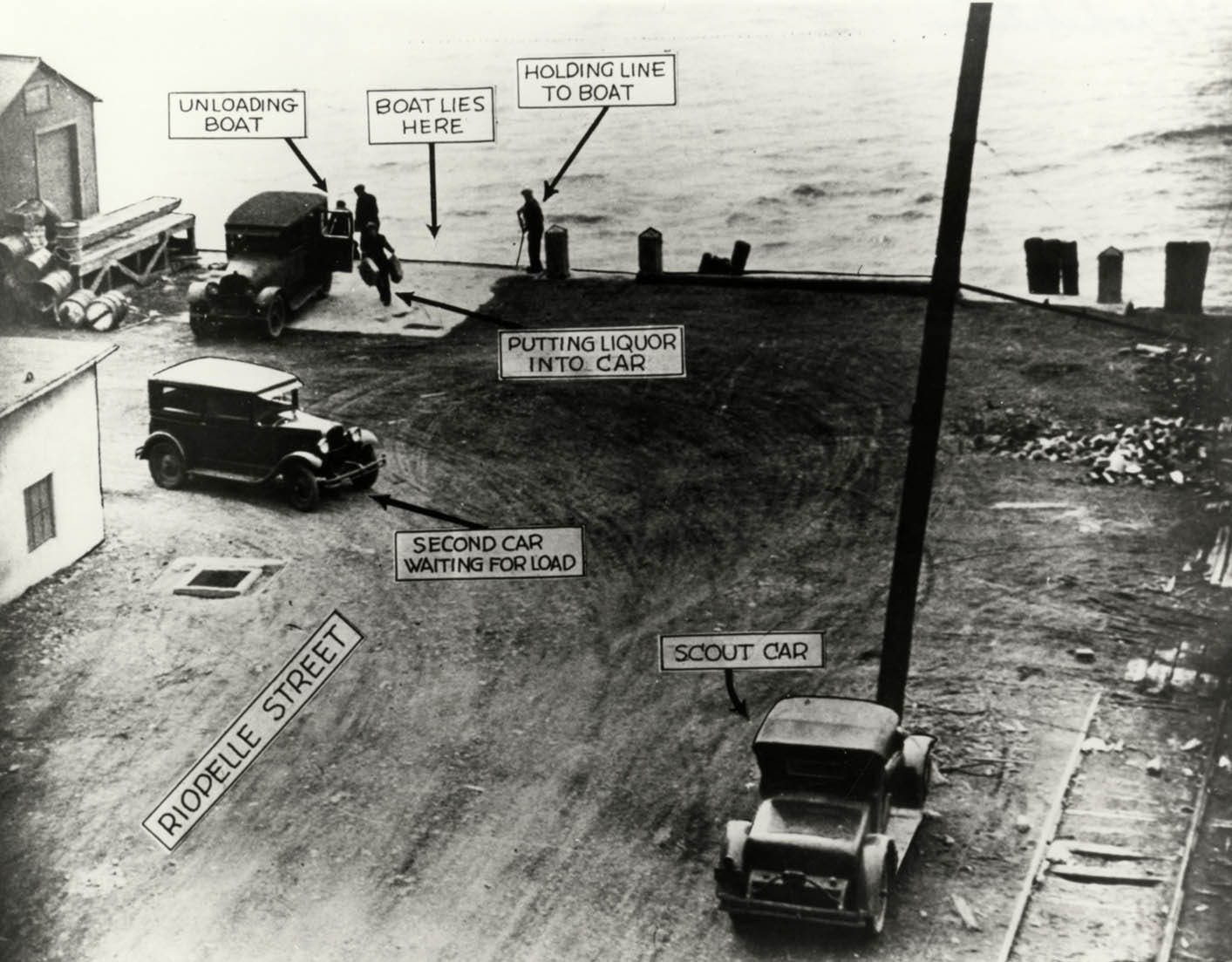
The “Purple Gang” imported liquor from Canada at the Detroit River.
Every Friday until the end of 2025, we will publish a post about each of the 27 Amendments to the Constitution.
As we continue to study the amendments to the Constitution each Friday, we must remember that the current administration is doing everything it can to ignore the Constitution.
The Constitution of the United States, which includes all of the amendments, is the law of this land. The current occupant of the White House believes he can govern by issuing almost weekly executive orders, but executive orders are not laws.
Currently, the #ConvictedFelon in the White House is blatantly ignoring any laws or policies he does not like, as well as ignoring his oath to uphold the Constitution. Specifically, he and members of his administration are disregarding the 1st, 4th, and 5th Amendments.
As the current administration and MAGA Republicans continue to take illegal and unconstitutional actions on practically a daily basis, a reminder that here at We Are Speaking, we are publishing an article about each of the Amendments to the Constitution every week on Fridays. You can search the archive on our website to view previous articles.
The 18th Amendment, ratified on January 16, 1919, and going into effect on January 17, 1920, established the prohibition of “intoxicating liquors” in the United States by banning the manufacture, sale, and transportation of alcoholic beverages.
The amendment was a result of the temperance movement and aimed to reduce crime and social problems, but it instead led to a rise in illegal alcohol production, a thriving black market, and the strengthening of organized crime. It was later repealed by the 21st Amendment in 1933.
Temperance movements, which had roots in early 19th-century America, gradually gained momentum, leading to widespread advocacy against alcohol consumption. Organizations such as the Women’s Christian Temperance Union (WCTU) and the Anti-Saloon League were at the forefront, arguing that alcohol was the root cause of societal issues like poverty, crime, and domestic abuse.
The temperance movement coincided with a broader Progressive Era reform agenda, which aimed to address social ills and promote moral improvement. The movement’s messaging resonated strongly in rural America and among religious communities who viewed alcohol as a vice detrimental to family and societal stability. This widespread support eventually propelled the movement from a moral crusade into the political domain, culminating in the passage of the 18th Amendment.
The text of the 18th Amendment stated: “After one year from the ratification of this article, the manufacture, sale, or transportation of intoxicating liquors within, the importation thereof into, or the exportation thereof from the United States and all territory subject to the jurisdiction thereof for beverage purposes is hereby prohibited.”
With the amendment’s ratification, the Volstead Act was enacted to enforce Prohibition.
The immediate effects of the 18th Amendment were mixed. On one hand, supporters touted decreases in alcohol-related accidents and instances of public drunkenness. However, the amendment also gave rise to significant unintended consequences. An underground market for alcohol flourished, leading to the proliferation of speakeasies and an increase in organized crime. Figures such as Al Capone became notorious as they capitalized on the illicit alcohol trade.
My hometown, the City of Detroit, because it is on the Detroit River across from Canada, was a very popular place for bringing illegal alcohol from Canada. A group named “The Purple Gang” was responsible for accepting tens of thousands of gallons of illegal alcohol at the shores of the Detroit River and then distributing them all over the country.
Economically, Prohibition had varied impacts. While certain industries, like brewing, were hurt, others, like soft drink companies and clandestine operations, benefited. Furthermore, enforcement proved to be a logistical and financial burden. It required significant resources to police the illicit alcohol trade, yet these efforts often fell short, plagued by corruption and insufficient manpower.
Socially, Prohibition revealed deep cultural divides—urban versus rural, modern versus traditional, and immigrant versus native-born populations.
By the late 1920s, public opinion began shifting against Prohibition, influenced by the evident failures in enforcement and the economic challenges of the Great Depression. Calls for repeal gained traction, culminating in the ratification of the 21st Amendment on December 5, 1933, which effectively ended Prohibition.
If you like us, REALLY like us, please click the little heart “Like” button at the top of this post!

Buttons:
Heart: Like Bubble: Comment Arrow Up: Share Arrows Circle: Restack
If you like us, REALLY like us, please click the “Like” button at the top of this post!
Your “Likes” mean a LOT to us! We appreciate your support!
Buy Pam a cup of Colombian Coffee!
Engage with us and our posts on Substack Notes, where we publish new content almost daily.
Our October 2025 subscriber goals are 150 new free subscribers and 75 new paid subscribers! You can help us reach our goal!
We Are Speaking is a reader-supported publication. To receive new posts and support our work, consider becoming a free or paid subscriber.
Follow Pam on Bluesky, the best “X” alternative.
Follow Keith on Bluesky, the best “X alternative.
Independent Authors and Creative Professionals: Check out my valuable books and courses on Branding and Marketing just for you via Pam Speaks 2 You.

