

Issue #955 The Choice, Friday, November 7, 2025
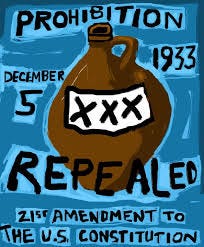
Every Friday until the end of 2025, we will publish a post about each of the 27 Amendments to the Constitution.
Prohibition was in effect from 1920 to 1933, fundamentally altering the social and economic landscape of the United States. The 21st Amendment, which repealed Prohibition, reflected the nation’s evolving mindset and set the stage for modern American liquor laws.
Prohibition officially began with the ratification of the 18th Amendment in 1919, which made the manufacture, sale, and transportation of alcoholic beverages illegal. The Volstead Act provided the legal framework for enforcing Prohibition, but it quickly became evident that outlawing alcohol came with its own set of challenges.
Despite its noble intentions, Prohibition led to widespread lawlessness. Speakeasies, illicit establishments that sold alcohol, flourished across the nation. Bootleggers and organized crime syndicates, most famously Al Capone’s Chicago Outfit, capitalized on the lucrative black market for alcohol. Rather than diminishing crime, Prohibition inadvertently fueled it, resulting in a chaotic era known for gang violence and pervasive corruption.
The government lost crucial tax revenue from alcohol sales, exacerbating the financial difficulties of the Great Depression. Additionally, the legal alcohol industry, which had been a substantial source of employment, suffered greatly. As the economic benefits promised by Prohibition failed to materialize, public sentiment began to shift.
By the early 1930s, public opinion had turned decisively against Prohibition. The Democratic Party, sensing the public’s growing discontent, made the repeal of Prohibition a key plank in its 1932 platform. Franklin D. Roosevelt, running for president, promised to end Prohibition.
The turning point came with the introduction of the 21st Amendment. On December 5, 1933, the amendment was ratified, repealing the 18th Amendment and effectively ending Prohibition. This was the first and only time in U.S. history that a constitutional amendment was repealed by another.
The repeal of Prohibition ushered in a new era of regulation. Rather than banning alcohol altogether, the government opted for a system of control and taxation. This pragmatic approach allowed for the revival of the legal alcohol industry, contributing to economic recovery. The 21st Amendment also granted individual states the authority to regulate alcohol as they saw fit, leading to a diverse patchwork of state laws that continue to operate today.
If you like us, REALLY like us, please click the little heart “Like” button at the top of this post!

Buttons:
Heart: Like Bubble: Comment Arrow Up: Share Arrows Circle: Restack
If you like us, REALLY like us, please click the “Like” button at the top of this post!
Your “Likes” mean a LOT to us! We appreciate your support!
Buy Pam a cup of Colombian Coffee!
Engage with us and our posts on Substack Notes, where we publish new content almost daily.
Our October 2025 subscriber goals are 150 new free subscribers and 75 new paid subscribers! You can help us reach our goal!
We Are Speaking is a reader-supported publication. To receive new posts and support our work, consider becoming a free or paid subscriber.
Follow Pam on Bluesky, the best “X” alternative.
Follow Keith on Bluesky, the best “X alternative.
Independent Authors and Creative Professionals: Check out my valuable books and courses on Branding and Marketing just for you via Pam Speaks 2 You.

