Those of us of a “certain age” remember always having the paper version of a Merriam-Webster Dictionary and a Roget’s Thesaurus with us always. The dictionary had a blue cover and the thesaurus had a red cover. I still have my tattered copies of both in paperback and hardcover, even though like most people I now look up definitions, synonyms, and antonyms online.
The first known thesaurus, called “On Synonyms,” was written in the 1st century CE by a Greek writer, grammarian, and historian named Philo of Byblos.
In the 4th century CE, an Indian poet and grammarian named Amara Sinha wrote a thesaurus in Sanskrit.
“Thesaurus of English Words and Phrases, Classified and Arranged So As To Facilitate the Expression of Ideas and Assist in Literary Composition”
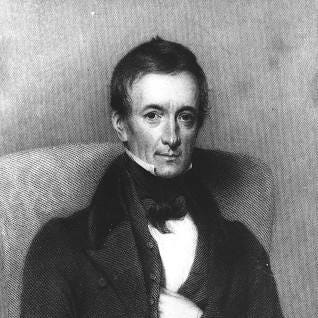
Yes, that is the original title of the first modern thesaurus published in 1852 by British doctor Peter Mark Roget. Roget’s Thesaurus has never been out of print since its first publication.
The article continues below.
No intrusive ads or annoying popups ever! Instead, please see the important information below and at the bottom of this post. That’s how we grow and sustain this publication. AND, please keep those “Likes” and comments coming! Thanks!
There is new lower pricing for the paid levels for as little as $5.00/month!
Paid subscribers with the Substack app are invited to participate in the W.A.S. Chat Room to discuss today’s post.
All posts are free for seven days after their publication. To read all older posts, including the complete archive, and to support us financially, please consider upgrading your subscription to a paid level. Save 17% with an annual subscription. Thank you for your support!
Although he was British, his last name sounds like it is French and is pronounced ro-zhay.
Roget’s primary career was as a physician, but he had many interests and other skills.
During his career, he helped to discover nitrous oxide as an anesthetic, created the London sewage system, invented the slide rule, helped in the development of the cinema industry, and co-founded the University of London.
Roget had a very turbulent childhood. His father died when Roget was four years old, and his mother, sister, and grandmother suffered from various mental illnesses. A young Roget was in the room when his uncle committed suicide.
From the age of eight, Roget developed an obsessive habit of making lists to help him cope with his family troubles. Today we would call this obsession “OCD,” or obsessive-compulsive disorder.
At the age of 26, Roget started developing his “reverse dictionary” with a list of synonyms as a reference to help him with his own writing. This first reference tool for his own use contained over 15,000 entries.
He named his reference book of synonyms a thesaurus, which is loosely Greek for “treasure house.”
The Publication of the First Thesaurus
Roget did not think of publishing his thesaurus until after he retired from his professional activities in the 1840s.
He spent years perfecting the indexing system for his thesaurus to make it more accessible to others.
The first edition of Roget’s Thesaurus was published in Britain in 1852, and it gained popularity in the United States when crossword puzzles came into wide use in the 1920s.
Peter Mark Roget died in 1869 at the age of 90. His son John Lewis Roget revised and expanded the thesaurus, and John’s son, Samuel Romilly Roget continued to expand and promote Roget’s Thesaurus well into the middle of the 20th century.
“We Are Speaking” is a reader-supported publication. To receive new posts and podcast episodes and to support our work, consider becoming a free or paid subscriber.
Don’t Forget! If you have the W.A.S. app for iOS and Android, you can listen to each article by clicking the little headset icon. You can also participate in the W.A.S. Chat (for paid subscribers only).
Read We Are Speaking in the Substack app
Available for iOS and Android
There are many benefits to using the W.A.S. app, including the ability to listen to our posts and podcast episodes straight from the app.
Check out the Global Creative Community Branding and Marketing Academy (GCC BMA) offering online courses networking opportunities, and one-on-one and group coaching for independent writers and creative and solo professionals.