Issue #1,016 Today In Black History, Monday, April 16, 2026
Our goal is to make “We Are Speaking” a best-selling publication by July 1, 2026, increasing our reach and influence! To achieve our goal, we will need 15 new paid subscribers every week, or 5 new paid subscribers for each of the three days per week we publish. If you value our publication, please consider becoming a paid subscriber for just $5/month or $50/year. We appreciate your financial support! We appreciate your financial support!
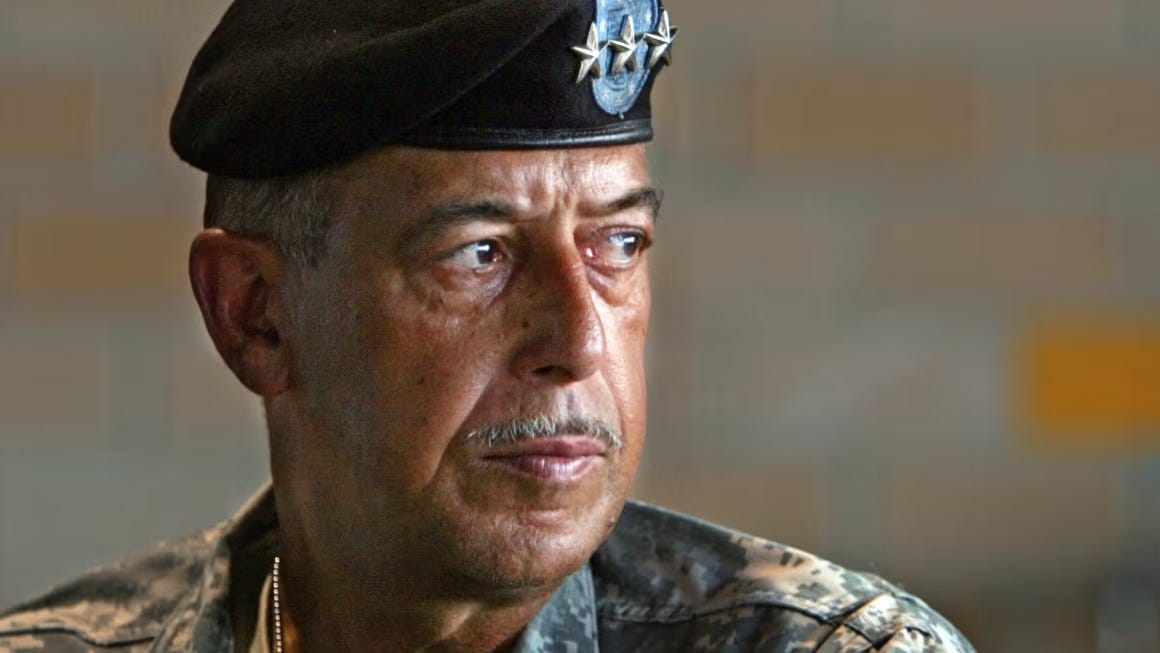
The Legacy of Lt. General Russel Honoré: A Leader Who Commanded with Integrity and Compassion
What do you remember about Hurricane Katrina in 2005? I remember the deaths, the destruction, the government’s non-readiness, and the incompetence of the people that G.W. Bush first appointed to deal with the aftermath. Remember when he said, “Heck of a job, Brownie!”
President Bush was referencing Michael Brown, the director of the Federal Emergency Management Agency (FEMA). Bush made this comment on September 2, 2005, while touring areas devastated by Hurricane Katrina, intending to praise Brown's efforts despite growing criticism of FEMA's response.
The Army Corps of Engineers warned authorities in Louisiana and New Orleans months earlier that the levees would not hold, but the warnings were ignored. Enter 3-star Lt. General Russel Honoré.
Lt. General Russel Honoré stands as one of the most distinguished military leaders in American history, a trailblazer whose career spanned decades and whose impact extended far beyond the battlefield. Born and raised in Louisiana, Honoré’s journey from a young man with a dream to a three-star general exemplifies the power of dedication, strategic thinking, and unwavering commitment to service.
Honoré’s military career began when he enlisted in the United States Army, and he eventually earned his commission as an officer. Throughout his career, he served in numerous significant positions, including command of the First Army, one of the largest and most important commands in the U.S. Army. His leadership style was characterized by a unique blend of military precision and genuine care for his personnel, earning him the respect and loyalty of soldiers at every level.
His famous statement to the people he oversaw was: “Don’t get stuck on stupid.”
Hailing from Lakeland, Louisiana, Honoré was commissioned as a second lieutenant of the infantry in 1971 upon graduating with a degree in vocational agriculture from Southern University and A&M College.
Honoré served in a variety of infantry command positions throughout his career and took command of the First Army based at Fort Gillem outside Atlanta. He also served as the vice director for operations, J-3, The Joint Staff, focusing on military support to civil authorities.
Before the fateful 2005 hurricane season, Honoré had helped coordinate the U.S. response to flooding in Venezuela in 1999 and Mozambique in 2000.
He also oversaw the military’s response to the 1986 space shuttle Columbia disaster and the sniper shootings in the Washington, DC, area in 2002.
One of the defining moments of Honoré’s career came in the aftermath of Hurricane Katrina in 2005. As the commander of Joint Task Force Katrina, he led one of the largest humanitarian and disaster relief operations in American military history. His swift and decisive action, combined with his empathy for the suffering citizens of New Orleans and the Gulf Coast, transformed him into a national figure. Honoré’s famous phrase, “We will meet the challenges and the moment,” became emblematic of his resolute determination to restore order and dignity to a region devastated by nature’s fury. His leadership during this crisis demonstrated that military strength could be paired with compassion and social awareness.
Compare that with the responses to people (citizens and non-citizens) of the current employees of the Department of Homeland Security (DHS), the Customs and Border Patrol (CBP), and FEMA, whom the current president declared should only help “red states.”
Beyond his military prowess, Honoré became an influential voice on climate resilience and environmental justice. He recognized that natural disasters disproportionately affect vulnerable communities and has advocated tirelessly for stronger disaster preparedness, infrastructure improvements, and equitable resource allocation. His work post-retirement has focused on building community resilience and ensuring that future generations are better prepared to face environmental challenges. He established the Honoré Initiative to focus on climate justice and community resilience, particularly in Louisiana and other vulnerable regions.
Honoré has also formed the GreenARMY, a coalition of community and environmental groups that works to address environmental issues in Louisiana.
Lt. General Honoré has also been a powerful advocate for diversity and inclusion within the military and broader society. As an African American officer who reached the highest echelons of military leadership, he himself represents breaking barriers and challenging systemic limitations. He has spoken candidly about the importance of representation in leadership. His mentorship of young officers and soldiers, regardless of background, has inspired countless individuals to pursue careers in service.
Throughout his life, Honoré has remained deeply connected to his Louisiana roots and has been an eloquent spokesperson for environmental justice and community empowerment. His books and public appearances have provided insights into leadership, resilience, and the importance of serving others. He has demonstrated that true leadership is not about wielding power for its own sake, but about using authority and influence to uplift communities and create positive change. (Emphasis is mine.)
Lt. General Russell Honoré’s legacy is one of service, integrity, and transformative leadership. Today, as we reflect on his contributions, we recognize him not just as a military commander but as a visionary leader whose influence continues to shape conversations about disaster preparedness, environmental justice, and the kind of compassionate leadership our nation needs.
Today In Black History
In 1669, an African American man named Emmanuel was baptized into a Lutheran congregation in New York.
In 1873, on Easter Sunday, an estimated 153 Black men were massacred in Colfax, Louisiana, while surrendering to a white mob of former Confederate soldiers and members of the Ku Klux Klan. The Colfax Massacre has been described as the worst incident of racial violence during Reconstruction.
In 1907, Harlem Hospital opened.
In 1944, South Carolina rejected Black Suffrage..
In 1964, Sidney Poitier won the Best Actor Oscar for his role in “Lilies of the Field.”
In 1966, President Lyndon Johnson nominated Andrew F. Brimmer, an economist and former Professor of Economics at the University of Pennsylvania, to serve as a Governor of the Federal Reserve System.
In 1997, Eldridge Tiger Woods won the 61st Masters Tournament in Augustus, Georgia, at age 21, becoming the youngest winner of that tournament.
Our goal is to make “We Are Speaking” a best-selling publication by July 1, 2026, increasing our reach and influence! To achieve our goal, we will need 15 new paid subscribers every week, or 5 new paid subscribers for each of the three days per week we publish. If you value our publication, please consider becoming a paid subscriber for just $5/month or $50/year. We appreciate your financial support! We appreciate your financial support!
You are also welcome to view “We Are Speaking” in Substack Notes. You can also read other Substack publications without subscribing to them when you join Notes.