Issue #1,022 Today In Black History, Monday, April 27, 2026
THANK YOU to all of our wonderful subscribers!
Our goal is to make “We Are Speaking” a best-selling publication by July 1, 2026, increasing our reach and influence! To achieve our goal, we will need 15 new paid subscribers every week, or 5 new paid subscribers for each of the three days per week we publish. If you value our publication, please consider becoming a paid subscriber for just $5/month or $50/year. We appreciate your financial support! We appreciate your financial support!
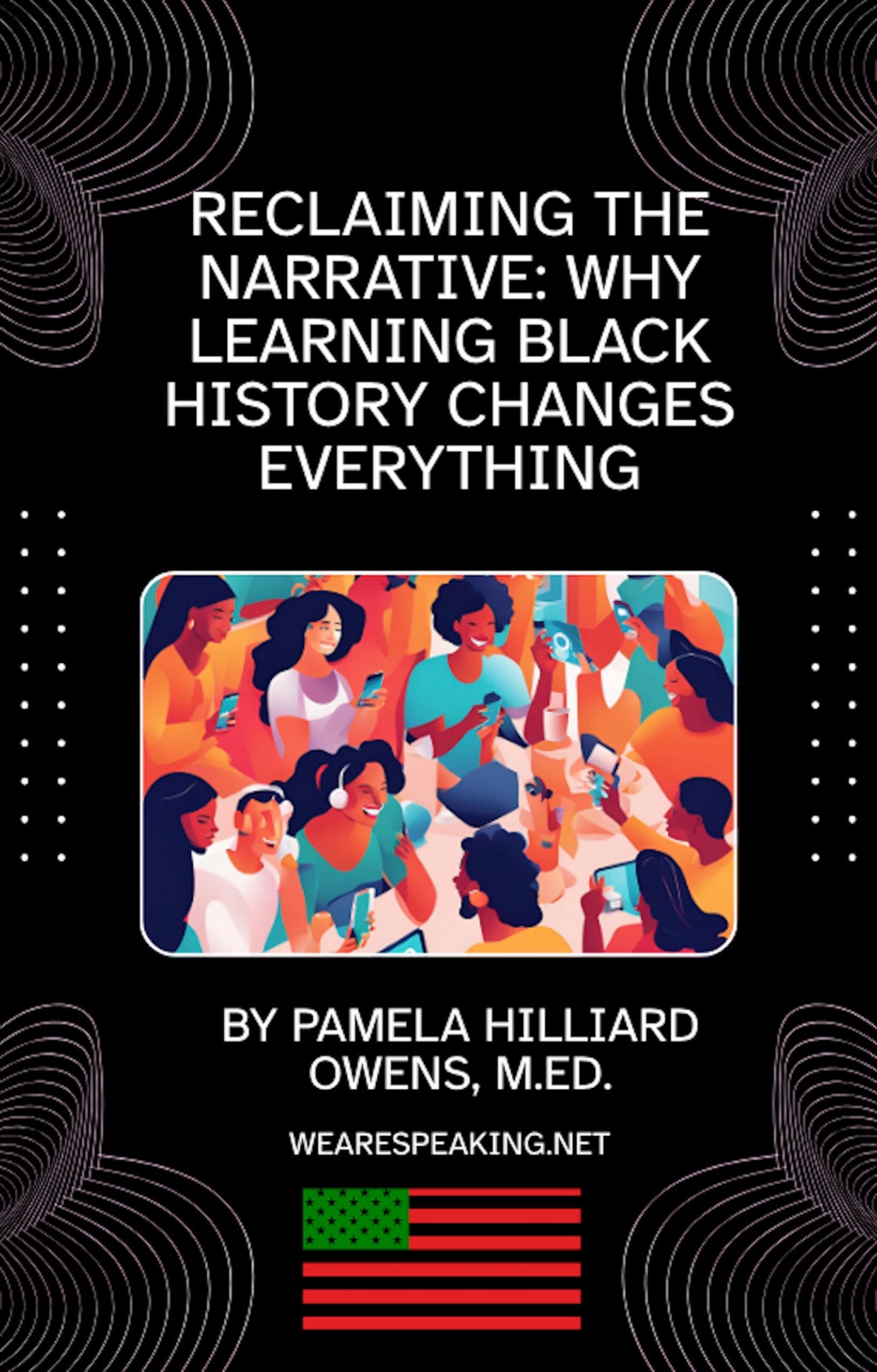
All new subscribers (free and paid) will receive this valuable eBook! If you don’t have yours, download it below.
Reclaiming The Narrative Why Learning Black History Changes Everything Generic Copy
Abraham Lincoln, The Man, the Myth, and the Complicated Truth
Abraham Lincoln, the 16th President of the United States, is one of the most mythologized figures in American history. He is invoked as the Great Emancipator, the savior of the Union, a man who gave his life so that a nation conceived in liberty might live up to its promise. All of that is true — and yet the full portrait of Lincoln is considerably more complicated, especially when viewed through the lens of Black history.
Like most of you, I was taught that Abraham Lincoln was one of our greatest presidents and that he should be revered without question. However, as a retired educator specializing in English, history, and government, I have learned more about President Lincoln’s political views.
Today’s Republicans, especially the MAGA Republicans, like to “remind us” that Lincoln was a Republican, but they conveniently forget to mention that the Republicans of the late 19th and early 20th centuries were completely different from the Republicans of the latter 20th century and beyond.
The Republican Party emerged in the Midwest (specifically Ripon, Wisconsin, and Jackson, Michigan) as a direct response to the Kansas-Nebraska Act, which threatened to expand slavery into Western territories.
Led by its first elected president, Abraham Lincoln (1861–1865), the GOP successfully guided the Union through the Civil War and spearheaded the abolition of slavery.
During Reconstruction, “Radical Republicans” pushed for civil and voting rights for newly freed African Americans.
Abraham Lincoln was born on February 12, 1809, in a log cabin in Hardin County, Kentucky. His family relocated to Indiana and later to Illinois, always in search of better land and better odds. His mother died when he was nine; his formal schooling totaled less than a year. What Lincoln lacked in education, he made up for in relentless self-teaching, reading borrowed books by firelight until he could argue law with the best-trained attorneys in Illinois.
He taught himself enough to pass the bar in 1836 and built a thriving legal practice in Springfield. He married Mary Todd in 1842, entered national politics as a congressman, and eventually became the unlikely Republican nominee for president in 1860 — a one-term congressman whose greatest asset was that he had made fewer enemies than anyone else.
Lincoln’s presidency began before he was even inaugurated. Seven Southern states had already seceded by the time he took the oath of office in March 1861, and the Confederate attack on Fort Sumter in April ignited four years of civil war.
Lincoln was a masterful wartime leader — patient, strategic, and willing to bear enormous personal grief while projecting public resolve. He held together a fractious coalition of generals, Cabinet members, and congressional factions. He absorbed military disasters and kept fighting. He understood that the war’s purpose had to expand beyond restoring the old Union if the North was going to sustain the will to win.
But Lincoln was explicit, even blunt, about his priorities. In an 1862 letter to newspaper editor Horace Greeley, he wrote: “If I could save the Union without freeing any slave, I would do it, and if I could save it by freeing all the slaves, I would do that.” The Union came first. Slavery’s fate was a strategic calculation as much as a moral one.
When Lincoln first called for men to join the Union Army in 1861, he specifically disallowed any Black people, free or slave, to join the military, because that would mean giving them arms that could have been used against white people.
Lincoln’s personal views on race were a product of his time and place — that is, they were not abolitionist views. He found slavery morally wrong and said so, repeatedly. He called it an injustice that mocked America’s founding ideals. But on the other hand, for much of his adult life, he did not believe in racial equality or in Black citizenship.
In his famous 1858 debates against Stephen Douglas, Lincoln was direct: “I am not, nor ever have been, in favor of bringing about in any way the social and political equality of the white and Black races.” For years, he supported a plan to colonize freed Black Americans in Africa or Central America — a position that many Black leaders, including Frederick Douglass, vigorously and publicly rejected.
Through the Emancipation Proclamation that took effect on January 1, 1863, Lincoln freed enslaved people only in Confederate-held territories — not in the border states that had remained loyal to the Union. It was, at its core, a war measure designed to destabilize the Confederacy and encourage enslaved people to flee or resist.
And yet, Lincoln’s views evolved. By 1864 and 1865, he was privately and publicly supporting limited Black voting rights. Douglass, who met Lincoln three times, ultimately called him “the first great man that I talked with in the United States freely.” The Thirteenth Amendment, which was ratified to completely abolish slavery, was pushed through Congress with Lincoln’s active involvement.
Lincoln did not free Black Americans out of the conviction that they deserved equal humanity — at least not initially. He freed them because it helped win a war, and then found that his moral compass was catching up to his political decisions. That arc matters. It is not a story of a saint; it is a story of a politician who grew — imperfectly, incompletely, but consequentially — under the pressure of history. Black Americans did not wait for Lincoln to free them; they seized freedom themselves in enormous numbers and forced the question onto Lincoln’s desk. That truth belongs at the center of any honest reckoning with his legacy.
Today In Black History
In 1877, President Rutherford B. Hayes removed federal troops from Louisiana, ending Reconstruction.
In 1903, the U.S. Supreme Court upheld the clauses in the Alabama constitution that disfranchised Black Americans.
In 1903, Maggie Lena Walker was named president of the St. Luke Bank and Trust, which she founded in Richmond, Virginia, becoming the first Black woman to head an American bank.
In 1960, the African nation of Togo gained its independence from France.
In 1961, the African nation of Sierra Leone gained independence from Great Britain.
In 1964, the African countries of Tanganyika and Zanzibar merged to form Tanzania.
Our goal is to make “We Are Speaking” a best-selling publication by July 1, 2026, increasing our reach and influence! To achieve our goal, we will need 15 new paid subscribers every week, or 5 new paid subscribers for each of the three days per week we publish. If you value our publication, please consider becoming a paid subscriber for just $5/month or $50/year. We appreciate your financial support! We appreciate your financial support!
You are also welcome to view “We Are Speaking” in Substack Notes. You can also read other Substack publications without subscribing to them when you join Notes.
That was a great overview of Lincoln's career and impact. I never get tired of learning about him -- and I loved Spielberg's movie! I'm convinced that Daniel Day-Lewis looked and sounded just like Lincoln. What did you think of the film?




That was a great overview of Lincoln's career and impact. I never get tired of learning about him -- and I loved Spielberg's movie! I'm convinced that Daniel Day-Lewis looked and sounded just like Lincoln. What did you think of the film?