

Issue #1069: Today In Black History, Monday, August 31, 2026
On August 28, 2026, a March for Voting Rights took place in front of the Lincoln Memorial, commemorating the 63rd anniversary of the 1963 March on Washington for Jobs and Justice, where Rev. Dr. Martin Luther King, Jr. delivered his famous “I Have a Dream” speech.
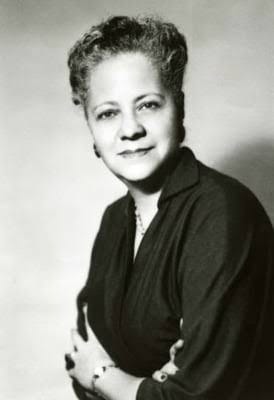
When the March on Washington drew a quarter of a million people to the National Mall on August 28, 1963, it did not happen by accident. Anna Arnold Hedgeman spent months turning white churches across the country into a pipeline of marchers — and then watched the men she helped put on that stage decide there was no room on it for her or any other influential woman.
From Iowa Classrooms to City Hall
Born July 5, 1899, in Marshalltown, Iowa, and raised in Anoka, Minnesota, Hedgeman graduated from Hamline University in 1922, the first Black student ever to attend the school. Trained as a teacher, she found the doors of St. Paul’s segregated school system closed to her and instead taught for two years at Rust College in Mississippi before turning to social work.
Over the next two decades, she ran YWCA branches in Ohio, New Jersey, and Harlem, building programs that trained Black women for jobs and leadership at a time when most institutions offered them neither. In 1944, she became executive secretary of the National Council for a Permanent Fair Employment Practices Commission, fighting to keep the wartime ban on employment discrimination alive after the war ended.
A decade later, in 1954, New York Mayor Robert Wagner named her to his cabinet, making Hedgeman the first Black woman ever to hold a mayoral cabinet post in New York City history — a post she used to push housing and welfare reform for Harlem.
Building the March, Pew by Pew
By 1963, Hedgeman was working as coordinator of special events for the National Council of Churches’ Commission on Religion and Race, and when A. Philip Randolph and Bayard Rustin began assembling the coalition behind the March on Washington for Jobs and Freedom, she became the only woman on its administrative committee.
Her assignment played directly to her decades of church organizing: convince white Protestant congregations, most of which had never marched for civil rights in their lives, that segregation was a moral emergency they could no longer sit out. She worked the phones and the pulpits, and by the day of the march, she had helped deliver an estimated 40,000 white Protestants to the Mall — a bloc of allies whose presence organizers credited with helping the march read as a genuinely national, interfaith demand rather than a Black-only protest that Washington could more easily dismiss.
A Seat on the Committee, Not the Stage
Hedgeman’s influence inside the planning rooms did not translate to influence on the program. Of the ten official march speakers, all were men. Weeks before the event, Hedgeman wrote to her fellow organizers pointing out the absurdity of a march for freedom that had no place for the women who had done so much of the work to build it. Her protest won a small concession: a brief “Tribute to Negro Women Fighters for Freedom,” in which Daisy Bates spoke a few sentences from the podium — nothing close to the full addresses given to her male colleagues.
The day after the march, Hedgeman convened a gathering of Black women activists under the pointed title “After the March — What?,” an early acknowledgment that Black women would have to build their own platforms rather than wait to be handed one.
Legacy
Hedgeman kept building those platforms for the rest of her life, co-founding the National Organization for Women in 1966 and running for both Congress and New York City Council President on the strength of her civil rights record.
She died January 17, 1990, in Harlem, and today her portrait hangs in the National Portrait Gallery — recognition, finally, for the organizer who helped fill the Mall in 1963 and then insisted the movement reckon with who it left off the stage.
Sources:
Biography: Anna Arnold Hedgeman, National Women’s History Museum
The Morning After: Black Women and the March on Washington, African American Intellectual History Society
Anna Arnold Hedgeman: The woman behind the March on Washington, IGNITE National
Making the March on Washington, August 28, 1963, JFK Library Archives
As a small Substack publication, we could really use your support!
Please enter your email below to support us by subscribing at the free or paid level for less than $10/month.
Independent authors and creative professionals! Please scroll to the “Shameless Plug” at the end to find out about the Pam Speaks 2 You Creative Business Community app for creative branding and marketing.
Today In Black History
In 1836, Black inventor Henry Blair patented the cotton planter.
In 1884, the Second Baptist Church, the oldest Black Baptist church in El Paso, Texas, was established.
In 1945, a total of 1,154,720 Black men and women were inducted or drafted into the U.S. Armed Services.
In 1962, the Caribbean nation of Trinidad and Tobago proclaimed its independence from Britain.
In 1979, Donald McHenry succeeded Andrew Jackson Young, Jr., as United States Ambassador to the United Nations.
Paid subscribers can always leave questions in the comments or email us.
Please consider becoming a paid subscriber for $10/month or less to access all of the articles and other benefits.


If you are an independent author or creative professional, this is your chance to join the Pam Speaks 2 You Creative Business Community, and there’s an app for that!
The Pam Speaks 2 You Apple/iOS app is live!
The Pam Speaks 2 You Google/Android app is live!
You can also access the Pam Speaks 2 You app on the web!