

Issue #973 Today In Black History, Wednesday, January 7, 2026
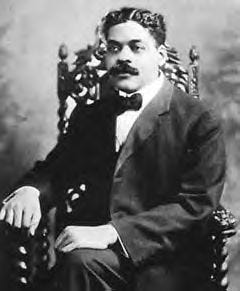
Arturo Alfonso Schomburg was a visionary historian, collector, and activist whose life’s work fundamentally transformed how the world understands Black history and the achievements of the African diaspora. Born in Puerto Rico and later based in New York City, Schomburg dedicated himself to a singular mission: proving that people of African descent had a rich and profound history worthy of recognition and celebration. His famous declaration—The American Negro must remake his past in order to make his future—encapsulates the driving philosophy behind his extraordinary legacy.
Schomburg was born on January 24, 1874, in Santurce (then known as Cangrejos), San Juan, Puerto Rico. His mother, Maria Josefa, was a free Black woman from St. Croix in the Danish Virgin Islands, while his father, Carlos Federico Schomburg, was a Puerto Rican of German descent.
A schoolteacher in San Juan told Schomburg that people of African descent had no history and had made no notable contributions to civilization. That experience inspired him to prove the teacher wrong. It sparked a lifelong passion for collecting materials that documented the achievements, contributions, and cultural richness of Black people worldwide.
At age 17, in 1891, Schomburg left Puerto Rico and moved to New York City, where he worked various jobs while pursuing education at night through classes at Manhattan Central High. He was initiated into the Freemasons in 1892.
During this period, Schomburg was deeply involved in political activism. In 1892, he co-founded Las Dos Antillas, a cultural and political organization dedicated to securing independence for Puerto Rico and Cuba from Spanish colonial rule. However, following the Spanish-American War in 1898, when Spain ceded Puerto Rico to the United States, the independence movement lost momentum.
From the early 1900s onward, Schomburg began amassing materials documenting the history and culture of Africa and its diaspora. Working as a supervisor in the Caribbean and Latin American Mail Section at the Bankers Trust Company (where he was employed from 1906 to 1929), Schomburg used his multilingual abilities in English, Spanish, and French to correspond with book dealers, collectors, and scholars across the United States, Europe, and Latin America.
His collection grew to encompass over 10,000 items, including rare books, manuscripts, sheet music, photographs, newspapers, periodicals, pamphlets, and artwork. Among his treasures were slave narratives, poems by Phillis Wheatley, correspondence from Toussaint L’Ouverture, and music composed by Chevalier de Saint-Georges. Schomburg also researched and documented the African ancestry of notable figures such as John James Audubon and Ludwig van Beethoven, challenging prevailing narratives about who had contributed to world civilization.
His aim was clear: “to preserve the historical records of the race, arouse race consciousness and race pride, inspire art students and give information to everyone about the Negro.”
Schomburg was also an active intellectual and writer. In 1911, he co-founded the Negro Society for Historical Research with journalist John Edward Bruce, bringing together scholars from Africa, the Caribbean, and the United States. That same year, he renamed a Masonic lodge the Prince Hall Lodge in honor of the first African American Freemason, demonstrating his commitment to celebrating Black achievement across all spheres.
Schomburg joined the American Negro Academy in 1914 and served as its president from 1920 to 1928. During the Harlem Renaissance, he shared his scholarship through articles published in influential Black periodicals, including The Crisis (edited by W.E.B. Du Bois), Opportunity, The Messenger, and The New York Amsterdam News.
His most famous essay, “The Negro Digs Up His Past,” was published in Survey Graphic Magazine in 1925 and was subsequently included in Alain Locke’s landmark anthology The New Negro. This essay became a foundational text of the Harlem Renaissance, including works by Zora Neale Hurston.
In 1926, the Carnegie Corporation provided a $10,000 grant (approximately $125,000 in today’s currency) to purchase the entire Schomburg collection on behalf of the New York Public Library. The materials were added to the Division of Negro Literature, History, and Prints at the Harlem branch on 135th Street.
Schomburg used some of the proceeds to travel to Europe, where he continued his research and collecting efforts. In 1931, he became curator of the Negro Collection at Fisk University in Nashville, where he dramatically expanded the university’s holdings from 100 to 4,600 items. In 1932, he returned to New York City and was appointed curator of the Schomburg Collection at the New York Public Library.
Schomburg died in Brooklyn on June 10, 1938, at the age of 64. In his honor, the Division was renamed the Schomburg Collection of Negro Literature, History, and Prints in 1940. In 1972, it was further elevated to become the Schomburg Center for Research in Black Culture, one of the world’s foremost research institutions dedicated to the study of Africa and the African diaspora. Today, the Schomburg Center houses over 11 million items and continues to serve scholars, students, and the general public.
Today In Black History
In 1822, the city of Monrovia, Liberia, was established by free African Americans and later colonized by the American Colonization Society.
In 1837, “The Weekly Advocate,” founded by Philip A. Bell, became the second major Black newspaper in the United States.
In 1840, Joseph Cinque and the other captured Africans who seized the slave ship Amistad and killed its captain and most of its crew were tried for murder and mutiny in New Haven, CT. The court found that they had the right to resist slavery.
In 1890, Black inventor W.B. Purvis patented the fountain pen.
In 1927, the Harlem Globetrotters played their first game in Hinckley, IL.
In 1948, Dr. Ralph Bunche, acting United Nations Mediator in Palestine, announced a cease-fire in the Palestinian/Israeli conflict.
In 1955, renowned opera singer Marian Anderson made her debut at the Metropolitan Opera as Ulrica in “Verdi’s Masked Ball.” She was the first Black singer in the company’s history.
In 1969, the Dance Theater of Harlem ballet school opened in a church basement.
In 1976, Dr. Mary Frances Berry became the first chancellor of a major research university when she was named Chancellor of the University of Colorado.
In 1985, the U.S. Supreme Court, in a 6-3 decision, upheld affirmative action.
In 2002, Shirley Franklin was sworn in as the first African American female mayor of Atlanta, and the first Black female mayor of a major American city.