Issue #1,008 Today In Black History, Wednesday, March 25, 2026
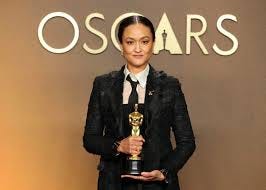
Photo Credit: PBS
Our goal is to make “We Are Speaking” a best-selling publication by July 1, 2026, increasing our reach and influence! To achieve our goal, we will need 15 new paid subscribers every week, or 5 new paid subscribers for each of the three days per week we publish. If you value our publication, please consider becoming a paid subscriber for just $5/month or $50/year. We appreciate your financial support! We appreciate your financial support!
I admit that I am not much of a movie-goer. In 2025, I saw only two movies at the theater: “Avatar Fire and Ash” and “Sinners.” The cinematography for both films was outstanding, but “Sinners” stood above and beyond and quite rightfully won the top Oscar for its cinematographer, Autumn Arkapaw.
Autumn Cheyenne Durald Arkapaw stands as one of the most accomplished cinematographers in contemporary cinema, breaking barriers and setting new standards in a field that has historically been dominated by men. Her innovative visual storytelling and technical mastery have earned her recognition on the highest stages of the film industry, including Academy Award wins that cement her legacy as a groundbreaking artist and visionary.
She was born on December 14, 1979, into a family that valued creativity and artistic expression. She is of Filipino descent on her mother’s side (with roots in Pampanga) and Black Creole descent on her father’s side. She has described her maternal grandfather, Guillermo Pagan Bautista of Pampanga, who was a resistance fighter during the Japanese occupation of the Philippines and a survivor of the Bataan Death March, “the most important man in my life” and “one of the biggest influences on my childhood and my family”.
Arkapaw developed an early fascination with how light, shadow, and composition could convey emotion and meaning. She pursued formal training in cinematography, where she distinguished herself through a distinctive visual language and an ability to interpret directors’ visions while adding her own artistic perspective. Her education and early experiences shaped her philosophy that cinematography is far more than technical expertise—it is a storytelling medium in its own right.
Throughout her career, Arkapaw has collaborated with some of the most respected filmmakers in the world, bringing her signature style to films that span multiple genres. Her work is characterized by a deep understanding of color theory, lighting design, and camera movement that serve the narrative.
Her breakthrough came with a series of critically acclaimed films that showcased her ability to create visually stunning worlds while maintaining intimate connections to her characters’ emotional journeys. These early successes established her reputation as a cinematographer who could enhance any director’s vision while bringing her own artistic sensibility to the screen. Critics praised her work for its beauty, intentionality, and profound understanding of visual language.
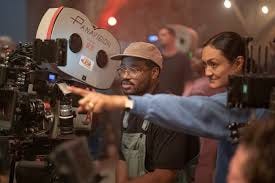
Photo Credit: IndieWire
Arkapaw shot the 2025 film Sinners on 65 mm film using a combination of IMAX 15-perf and Ultra Panavision 70 cameras, which made her the first female director of photography to shoot any movie on large-format IMAX film. For her work on Sinners, she became the first woman of color to be nominated for the Academy Award for Best Cinematography, becoming the first female cinematographer, first black person, and first Filipino to win in the category.
Autumn Durald Arkapaw also served as the Director of Photography for Marvel’s Black Panther: Wakanda Forever (2022). She used her high-contrast, emotionally charged, large-format visual style to explore the themes of grief and strength following Chadwick Boseman’s death. She was recommended for the project by Rachel Morrison, the cinematographer for the first Black Panther film.
Arkapaw’s Oscar wins represent significant milestones not just for her personally, but for the broader film community. Her recognition by the Academy has inspired countless aspiring cinematographers, particularly those from underrepresented communities, to pursue their artistic visions and believe that their voices matter in cinema.
Beyond her work as a cinematographer, Arkapaw has become an advocate for diversity and inclusion within the film industry. She has spoken openly about her experiences and the barriers she has faced, while also mentoring emerging cinematographers and working to create more opportunities for underrepresented artists.
Her technical innovations have also influenced how contemporary cinematography is taught and practiced. Other cinematographers study her work to understand how she achieves her effects and how she makes artistic choices that serve each specific story.
From intimate dramas to large-scale productions, she adapts her visual language to serve the story while maintaining the distinctive qualities that make her work recognizable and respected.
Autumn Cheyenne Durald married Australian cinematographer Adam Arkapaw in 2015. They have one child.
Today, we celebrate the achievements of Autumn Arkapaw and acknowledge not only her extraordinary contributions to cinema but also her role in paving the way for future generations of cinematographers. Arkapaw exemplifies the power of artistic excellence combined with a commitment to community—a true testament to her status as one of cinema’s most important contemporary artists.
Today In Black History
In 1807, the British Parliament abolished the slave trade throughout the British Empire.
In 1895, Italian troops invaded Abyssinia (Ethiopia) but failed to colonize the African nation.
In 1910, the Liberian Commission recommended financial aid and the establishment of a U.S. Navy coaling station in Liberia.
In 1931, the Scottsboro Boys, nine young African-American males, were falsely arrested and charged with raping two white women and collectively served over 100 years in prison. This case also finally established African Americans’ right to serve on juries.
In 1958, Black boxing champion Sugar Ray Robinson became the first boxer to win a world championship five times.
In 1965, the Rev. Dr. Martin Luther King, Jr., along with thousands of other civil rights leaders and supporters, completed the Selma to Montgomery March, which took four days, despite attacks on many marchers.
In 1966, the U.S. Supreme Court ruled that the “poll tax” was unconstitutional.
In 1975, Salem Poor, who, along with Peter Salem, fought in the American Revolutionary War with other Black soldiers at the Battle of Bunker Hill and Breed’s Hill, was commemorated on a U.S. postage stamp.
In 1991, future EGOT (Emmy, Grammy, Oscar, and Tony) winner Whoopi Goldberg won an Academy Award for best supporting actress for her role in the movie “Ghost.” She was the second Black woman to win this award after Hattie McDaniel for “Gone with the Wind.”
Our goal is to make “We Are Speaking” a best-selling publication by July 1, 2026, increasing our reach and influence! To achieve our goal, we will need 15 new paid subscribers every week, or 5 new paid subscribers for each of the three days per week we publish. If you value our publication, please consider becoming a paid subscriber for just $5/month or $50/year. We appreciate your financial support! We appreciate your financial support!
You are also welcome to view “We Are Speaking” in Substack Notes. You can also read other Substack publications without subscribing to them when you join Notes.