

Issue #1,041 Today In Black History, Monday, June 22, 2026
June is Black Music Appreciation Month. Black Music Month was initiated in 1979 by Philadelphia songwriter Kenny Gamble, pioneering radio DJ Ed Wright, and media strategist Dyana Williams. These three music icons successfully campaigned the idea to President Jimmy Carter, who held the first White House reception celebrating Black music on June 7, 1979.
This month in Today In Black History, we will highlight a few of the famous and lesser-known Black musicians.
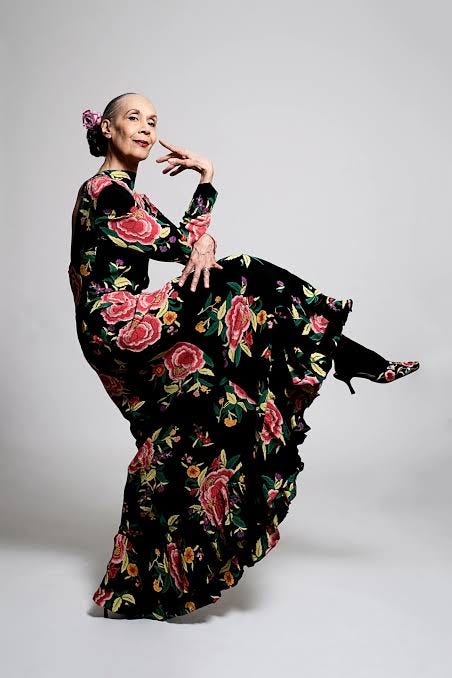
Born on March 6, 1931, in Los Angeles, Carmen de Lavallade grew up in a world rich with heritage. Her Creole parents had deep roots in New Orleans, and she spent much of her childhood with her aunt Adele. Adele wasn’t just family; she owned one of the first Black history bookstores on Central Avenue, a place that surely sparked Carmen’s early love for culture. It seems excellence ran in the family, too—her cousin, Janet Collins, made history as the first Black prima ballerina at the Metropolitan Opera, setting a path that Carmen would soon follow and expand in her own beautiful way.
Carmen’s own journey into ballet started at sixteen. After high school, she earned a scholarship to study with Lester Horton, whose Los Angeles dance company was truly ahead of its time in its inclusivity. By 1949, she was a member of the Lester Horton Dance Theater, and from 1950 to 1954, she shone as its lead dancer. It was here that she really found her voice, blending technical skill with a dramatic presence that would become her trademark.
Life changed in 1954 when she made her Broadway debut in “House of Flowers.” That show was a real turning point—not just for her career, but for her heart. It’s where she met Alvin Ailey, who had moved to New York just to be her dance partner, sparking a lifelong friendship that changed American dance. It’s also where she met the love of her life, dancer and designer Geoffrey Holder. They married the following year and shared an incredible sixty-year partnership. One of their most touching collaborations was her solo “Come Sunday,” which Geoffrey choreographed to a spiritual sung by Odetta.
What made Carmen so special was her incredible range. In 1956, she stepped onto the stage at the Metropolitan Opera as the prima ballerina in “Samson and Delilah” and “Aida,” becoming one of the first Black women to ever hold that prestigious title. She had this wonderful ability to move between worlds—ballet, modern dance, opera, and even Hollywood movies like “Carmen Jones” (1954) and “Odds Against Tomorrow” (1959). Over the years, she worked with the absolute best in the business, from Agnes de Mille to John Butler, creating a legacy that truly represents the heart of twentieth-century dance.
In 1958, she helped start the Alvin Ailey American Dance Theater, giving her talent to what would become a global institution. She later shared her wisdom at Yale and Harvard, serving as a choreographer and resident performer. But Carmen never really stopped dancing. In 1996, at the age of 65, she co-founded PARADIGM, a dance collective for performers over 50. It was her way of saying that dance, and the beauty of a body in motion, doesn’t have an age limit.
The beautiful story of her life with Geoffrey was captured in the 2005 documentary “Carmen and Geoffrey.” Even after Geoffrey passed away in 2014, Carmen kept going—performing, teaching, and mentoring well into her nineties. She was a living lesson in what it looks like to live a life of discipline and grace.
In 2017, the Kennedy Center awarded her its highest honor, celebrating a lifetime of improving American culture. It was a well-deserved moment for a woman who spent over seventy years showing the world that excellence and Blackness are one and the same.
Carmen de Lavallade passed away on December 29, 2025, in New Jersey at 94. She leaves behind more than just dates and awards; she leaves a trail of beauty and a generation of dancers who saw, through her, that grace can be its own powerful form of defiance. She didn’t just open doors; she made every room she entered better just by being in it.
Today In Black History
In 1884, Lane College, formerly the C.M.E. High School, was founded in Jackson, Tennessee.
In 1870, Congress created the Department of Justice primarily to arrest members of the KKK.
In 1938, boxer Joe Louis knocked out the German Boxer Max Schmeling, humiliating Adolf Hitler.
In 1963, 13-year-old Stevie Wonder released his first single, “Fingertips,” the first live, no-studio recording to go No. 1 on the Billboard charts.
In 1965, Arthur Ashe led UCLA to the NCAA tennis championship.
In 1970, President Richard Nixon signed a bill extending the 1965 Voting Rights Act through 1975 and lowering the voting age to 18 for all elections.
In 2015, South Carolina Governor Nikki Haley called for the removal of the Confederate flag from statehouse grounds after the massacre of 9 members of the Mother Emanuel A.M.E. Church in Charleston.
Please share and subscribe to help us grow this publication.
If you like us, REALLY like us, please click the “Like” button at the end of this post!
We appreciate your support!
You are welcome to view “We Are Speaking” in Substack Notes. You can also read other Substack publications without subscribing to them when you join Notes.
To financially support “We Are Speaking” for no more than $5 per month, please subscribe at the paid level.
