

Issue #1074: Today In Black History, Wednesday, September 16, 2026
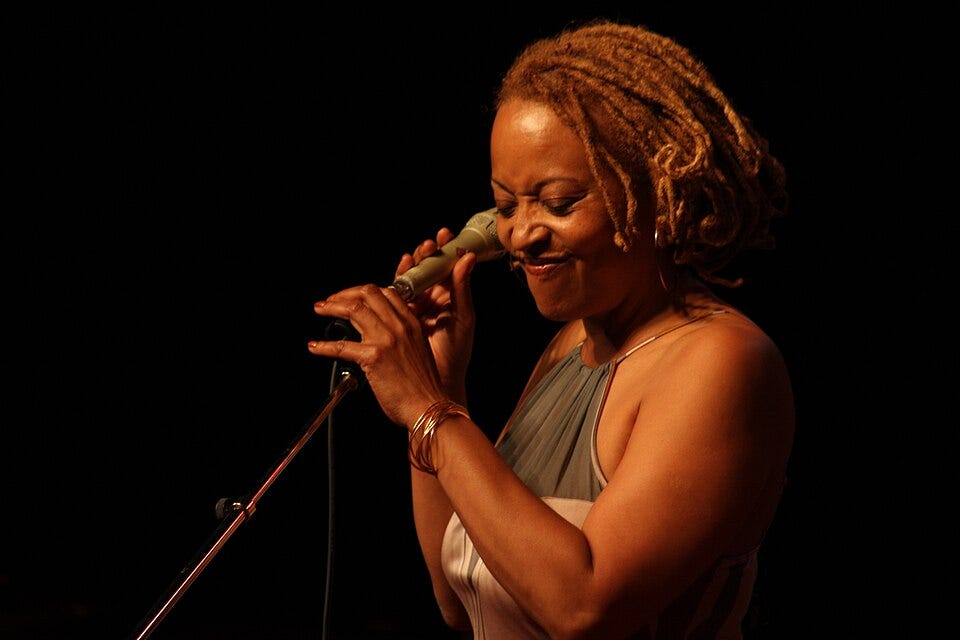
Cassandra Wilson never sounded like anyone else, and she never tried to. Over four decades of recording, the Mississippi-born vocalist built a body of work that treated jazz standards, Delta blues, folk-rock, and pop songs as branches of the same tree—all filtered through a deep, smoky contralto that critics struggled to categorize and audiences never forgot. Wilson died on September 2, 2026, in her hometown of Jackson, Mississippi, at age 70, closing out a career that reshaped what a jazz singer could sound like.
Roots in Jackson
Born Cassandra Fowlkes on December 4, 1955, Wilson grew up in a household steeped in music. Her father was a jazz guitarist and bassist; her mother was an educator who loved music just as fiercely. She started piano lessons at six and picked up guitar at twelve, and by the time she studied theater arts and philosophy at Millsaps College — later earning a mass communications degree from Jackson State University — the sound of the Mississippi Delta was already woven into her musical instincts, even as her ambitions pointed toward jazz.
Finding Her Voice in New Orleans and New York
Wilson’s real education began after college. In New Orleans in 1981, she studied with Ellis Marsalis Jr. and other local jazz figures. A year later she moved to New York City, where she met saxophonist Steve Coleman and became a founding member of the M-Base Collective — a loose association of young musicians committed, as Wilson put it, to “creating your own voice” rather than replaying the past. She toured with Henry Threadgill’s avant-garde trio New Air and released her debut album, Point of View, in 1986. It was daring, angular music that put her on the map as a serious improviser well before she became a household name.
The Blue Note Years
Everything changed in 1993, when Wilson signed with Blue Note Records and released Blue Light ‘Til Dawn, an album that reintroduced her as something rarer than a jazz singer: a genre-dissolving song interpreter. She followed it with New Moon Daughter in 1996, which won her the first of two Grammy Awards for Best Jazz Vocal Album. The record’s covers of Robert Johnson’s blues and Neil Young’s “Harvest Moon” sat comfortably beside jazz standards, all rendered in that unmistakable low, unhurried voice. A decade later, Loverly (2008) brought her a second Grammy in the same category. In between, she lent her voice to Wynton Marsalis’s Blood on the Fields, the 1997 oratorio that won the Pulitzer Prize for Music, and recorded with Pat Metheny, Dave Holland, Terri Lyne Carrington, and Angélique Kidjo.
Recognition and Legacy
The honors accumulated accordingly: DownBeat named her Female Jazz Vocalist of the Year in 1995 and 1996, Time magazine called her “America’s Best Singer” in 2001, and in 2022 the National Endowment for the Arts named her a Jazz Master, the nation’s highest honor in the field. Mississippi added its own tributes, including a marker on the state’s Blues Trail.
What set Wilson apart was never vocal acrobatics — she rarely reached for a high note when a held, textured low one would do. She approached every song, whether written by Muddy Waters or Cyndi Lauper, as a story to inhabit rather than a melody to perform. That patience, and that refusal to separate jazz from the blues and folk traditions that fed it, opened space for a generation of vocalists who followed her in refusing to be boxed into one genre. Cassandra Wilson didn’t just sing across boundaries — she quietly erased them, and jazz is wider for it.
Sources:
NPR: Cassandra Wilson, Grammy-winning jazz vocalist, dies at 70
National Endowment for the Arts: Cassandra Wilson
As a small Substack publication, we could really use your support!
Please enter your email below to support us by subscribing at the free or paid level for less than $10/month.
Independent authors and creative professionals! Please scroll to the “Shameless Plug” at the end to find out about the Pam Speaks 2 You Creative Business Community app for creative branding and marketing.
Today In Black History
In 1848, the French abolished Slavery in all of its territories.
In 1915, Haiti became a de facto protectorate of the United States by treaty.
In 1933, United Artists released “Emperor Jones,” starring Paul Robeson as Brutus Jones. This was Robeson’s first starring movie role and the first major Hollywood production starring an African American, with whites in supporting roles.
In 1989, Debbie Turner became the third African American to be crowned Miss America since 1921.
In 1990, Keenan Ivory Wayans ’ “In Living Color” won an Emmy for Outstanding Comedy Series.
Paid subscribers can always leave questions in the comments or email us.
Please consider becoming a paid subscriber for $10/month or less to access all of the articles and other benefits.


If you are an independent author or creative professional, this is your chance to join the Pam Speaks 2 You Creative Business Community, and there’s an app for that!
The Pam Speaks 2 You Apple/iOS app is live!
The Pam Speaks 2 You Google/Android app is live!
You can also access the Pam Speaks 2 You app on the web!