Issue #1,085 Today In Black History, Monday, October 12, 2026
This is a republished post from 2025.
Please enter your email below to support us by subscribing at the free or paid level for less than $10/month.
We Are Speaking is a small reader-supported publication. To receive new posts and support our work, consider subscribing at the free or paid level.
Independent authors and creative professionals! Please scroll to the “Shameless Plug” at the end to find out about the Pam Speaks 2 You Creative Business Community app for creative branding and marketing.
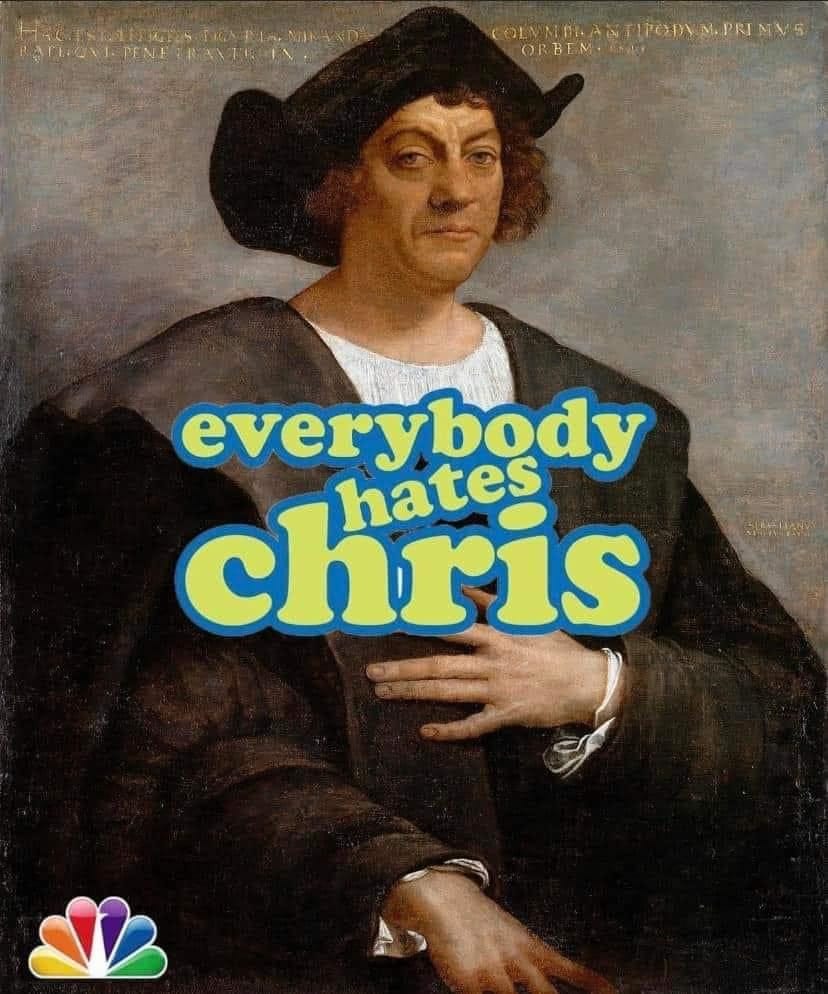
The Truth About Christopher Columbus
As many of us know, Christopher Columbus did not actually discover America. He reached some Caribbean islands, but never North America. Yet this country has officially celebrated Columbus Day for almost 100 years.
The current occupant of the White House recently declared that the second Monday in October will again be celebrated as Columbus Day, not as Indigenous Peoples’ Day, as President Joe Biden declared a few years ago.
The #ConvictedFelon and #AdjudicatedRapist also called Christopher Columbus “ ...an American hero…” even though Columbus never even reached North America, much less the area where the United States eventually came to be.
Of course, he would want to celebrate a fellow sexual predator.
Here’s what really happened:
The arrival of Christopher Columbus brought with it death, destruction, and devastation to the Indigenous nations. The first interactions with the Europeans introduced the Indigenous people to diseases for which they had no immunity, killing tens of thousands of them as a result. Although he set out in search of spices, seeing Indigenous people adorned in gold jewelry made Columbus greedy for their gold.
His new mission was to bring back as much gold as he could, and so his cruel rampage began. He tortured innocent Indigenous people for their gold, cutting off the hands of those who refused to give up their gold, and sometimes even burning down entire villages for the precious mineral.
Columbus was also a slave trader, forcing hundreds of the indigenous people he found here onto his ships to take them back as slaves to Spain. He also managed to kidnap Indigenous girls, preferring young girls between the ages of 8- 10, and force them into sexual slavery to provide pleasure for himself and his crew members.
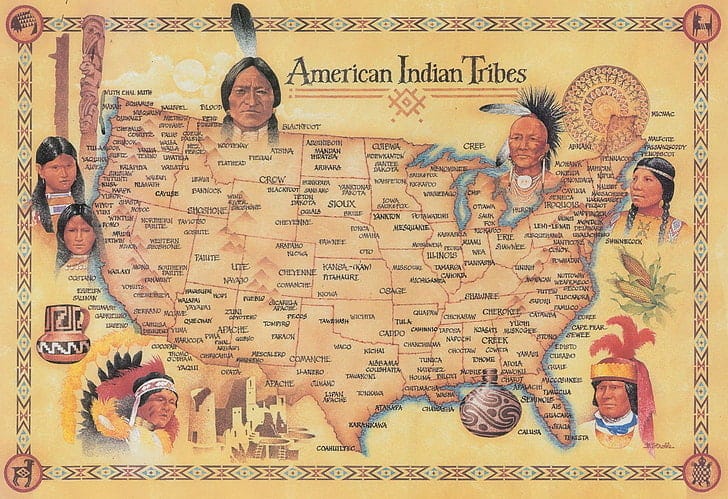
Therefore, Indigenous Peoples’ Day should replace the current celebrations of Columbus Day, a day that continues to celebrate an individual who was directly responsible for genocide, inflicting pain, suffering, and torture on thousands of Native Americans, with a day that honors the original inhabitants.
The Italian Americans have many other great Italians to celebrate, including Galileo, Michelangelo, da Vinci, and Marconi. Christopher Columbus is not an Italian to celebrate.
The Difference Between “Native” and “Indigenous”
While “native” can refer to any person or thing (including plants and animals) in a particular place, “indigenous” is a more specific term for the earliest known inhabitants of a region, particularly before colonization. “Indigenous” carries more weight, often implying a strong cultural and spiritual connection to ancestral lands that predates foreign settlement, while “native” can be a more general, sometimes less-preferred term for someone from a place.
Indigenous Peoples’ Day: A Day of Recognition and Reflection
Although Columbus Day is still a federal holiday, many states, including my home state of Michigan, have replaced “Columbus Day” with “Indigenous Peoples’ Day.”
Indigenous Peoples’ Day is more than just a holiday; it’s a movement towards acknowledgment and respect. It recognizes the historical and ongoing injustices Indigenous communities face and celebrates their profound contributions to society—including their art, knowledge, culture, and longstanding, sustainable stewardship of the environment.
The Black Seminoles: A Testament to Shared Histories and Resistance
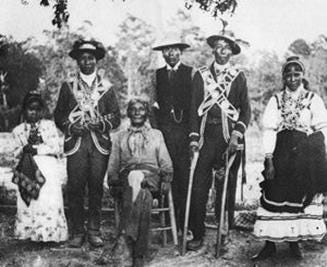
The Black Seminoles are African-descended people who forged deep, enduring alliances with the Seminole Indians in Florida.
The Black Seminoles were a community of African Americans, including formerly enslaved people and their descendants, who allied with the Seminole Nation in Florida. They lived, fought, and intermarried with the Seminole, creating a unique culture that combined African and Native American traditions. After the Seminole Wars, many were forced to relocate to Indian Territory (Oklahoma) but faced discrimination, leading some to flee to Texas and Mexico.
In the late 17th and early 18th centuries, Africans escaping slavery found refuge among the Seminole tribes in Florida. These runaways, often called Maroons, formed close-knit communities with the Seminoles, sharing their lives, cultures, and battles for freedom. Together, they resisted slave catchers, endured wars, and challenged the encroachment of European settlers and the U.S. government.
The Black Seminoles played a vital role in the Seminole Wars, the longest and costliest Indian Wars fought in the United States. Their courage and strategic acumen were instrumental in the Seminole resistance against removal and slavery.
Following the wars, after President Andrew Johnson enacted the Indian Removal Act, many Black Seminoles were forcibly moved to Indian Territory (modern-day Oklahoma), as part of the Trail of Tears. There, they continued to face discrimination and the threat of re-enslavement.
Many Black Seminoles later migrated to Texas and northern Mexico, where they formed new communities, such as the Muscogos in Mexico.
Today, descendants of the Black Seminoles live in Oklahoma, Texas, Mexico, and the Bahamas. They continue to work to preserve their unique history and heritage.
Today In Black History
In 1968, the African nation of Equatorial Guinea gained its independence from Spain.
Paid subscribers can always leave questions in the comments or email us.
Please consider becoming a paid subscriber for $10/month or less to access all of the articles and other benefits.
If you are an independent author or creative professional, this is your chance to join the Pam Speaks 2 You Creative Business Community, and there’s an app for that! We have 5 eBooks and 5 courses, plus networking communities designed specifically for you in the Branding and Marketing Academy!