

Issue #1,038 Today In Black History, Monday, June 15, 2026
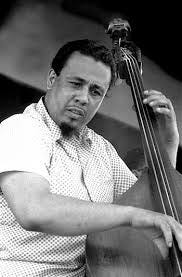
June is Black Music Appreciation Month. Black Music Month was initiated in 1979 by Philadelphia songwriter Kenny Gamble, pioneering radio DJ Ed Wright, and media strategist Dyana Williams. These three music icons successfully campaigned the idea to President Jimmy Carter, who held the first White House reception celebrating Black music on June 7, 1979.
This month in Today In Black History, we will highlight a few of the famous and lesser-known Black musicians.
Charles Mingus: The Life, Times, and Influence of Jazz’s Angry Man
Unless they specifically study jazz music, younger people may not have heard of Charles Mingus or even remember that jazz is a uniquely American musical form. That is one reason why I thoroughly enjoy researching and writing about jazz legends like Charles Mingus.
I remember when, a few years ago, Madam Vice President Kamala Harris visited a record store in D.C. and said she was looking for some jazz LPs. The store owner at first recommended some of the better-known musicians, such as Duke Ellington or Louis Armstrong, but Madam VP said no; she wanted something by Charles Mingus. The store owner was shocked by her choice, but he did have those recordings to sell.
Charles Mingus was born on April 22, 1922, at an Army base in Nogales, Arizona, and raised in the Watts neighborhood of Los Angeles. His mixed heritage—African American, Native American, Swedish, and Chinese—and the racial tensions he encountered as a child shaped a worldview that would later explode across his music.
He began on the trombone and cello before settling on the double bass as a teenager, a choice partly forced by the era’s racial politics: Mingus once said he was discouraged from pursuing classical cello because Black musicians were not welcomed into symphony orchestras. That early rejection planted a seed of defiance that never left him.
By his early twenties, Mingus was already an exceptional bassist, playing with bandleaders like Louis Armstrong, Kid Ory, and Lionel Hampton, who recorded Mingus’s composition “Mingus Fingers” in 1947. In the early 1950s, he moved to New York and quickly became part of the bebop revolution, performing and recording with giants including Charlie Parker, Dizzy Gillespie, and Bud Powell.
Mingus was never content to simply play other people’s music. In 1952, he co-founded Debut Records with Max Roach, one of the first major artist-owned record labels in jazz, giving musicians more control over their work in an industry that routinely exploited Black artists. This entrepreneurial streak reflected a broader principle: Mingus believed musicians deserved ownership over their art and their livelihoods, decades before that became a common demand in the music business, when Ray Charles and Prince demanded ownership over their own music.
As a composer, Mingus defied easy categorization. He fused the structured intensity of Duke Ellington—whom he revered as a primary influence—with the freedom of gospel music, the fire of bebop, the blues, and elements of what would become free jazz. His compositions often shifted tempo and mood abruptly, mixing collective improvisation with tightly arranged passages.
That willingness to confront racism and injustice head-on set Mingus apart from many of his contemporaries. “Fables of Faubus” was so politically charged that Columbia Records initially refused to release it with its lyrics intact, fearing backlash; Mingus later recorded the full version, with its biting words, on an independent label. Throughout his career, Mingus used his music as a form of social commentary, addressing segregation, police brutality, and the everyday indignities faced by Black Americans.
Mingus was also a generous mentor and bandleader, nurturing the talents of musicians such as Eric Dolphy, Jaki Byard, Charles McPherson, and Roland Kirk. His Jazz Workshop ensembles became training grounds for some of the era’s most adventurous players, and his rehearsals—often demanding and unpredictable—pushed musicians to internalize complex compositions without relying solely on written notation, in a manner closer to an oral tradition.
In the early 1970s, declining health slowed Mingus’s pace, but his creative ambitions did not shrink. In his final years, Mingus was diagnosed with amyotrophic lateral sclerosis (ALS), which gradually robbed him of his ability to play. He continued composing until his death on January 5, 1979, in Cuernavaca, Mexico, where he had traveled seeking alternative treatments.
Mingus’s influence reaches far beyond jazz. His insistence on musical and economic independence inspired generations of artists to seek control over their own work. His fusion of composition and improvisation influenced everyone from later jazz innovators to rock, funk, and hip-hop artists who have sampled his recordings. The Mingus Big Band continues to perform his music today, and “Mingus Ah Um” remains a staple of college jazz curricula. Beyond the notes, Mingus left a model of the artist as truth-teller—someone who refused to separate music from the politics and pain of the world around him, and who demanded that both his art and his humanity be taken seriously.
Today In Black History
In 1864, the U.S. Congress passed legislation equalizing pay for Black soldiers.
In 1877, Henry O. Flipper became the first Black graduate of West Point.
In 1897, Black inventor R.A. Butler patented a train alarm.
In 1921, African American female pilot Bessie Coleman became the first U.S. woman to receive a pilot’s license from the French Federation Aéronautique Internationale (FAI).
In 1921, Sadie Tanner Modell Alexander became the first Black person to receive a Ph.D. In Economics, graduating from the University of Pennsylvania.
In 1968, Ellen Holly became the first African American on daytime television in the role of “Carla” on “One Life to Live.
In 1971, Vernon E. Jordan was appointed executive director of the National Urban League.
In 1971, 17-year-old Cheryl White became the first Black female professional jockey.
Please share and subscribe to help us grow this publication.
If you like us, REALLY like us, please click the “Like” button at the end of this post!
We appreciate your support!
You are welcome to view “We Are Speaking” in Substack Notes. You can also read other Substack publications without subscribing to them when you join Notes.
To financially support “We Are Speaking” for no more than $5 per month, please subscribe at the paid level.
