Issue #999 Today In Black History, Monday, March 2, 2026

Dr. Auma Obama is a beacon of hope and transformation across Africa and beyond. As the half-sister of former U.S. President Barack Obama, she has carved her own remarkable path as an educator, author, and social entrepreneur dedicated to empowering young people through education and mentorship.
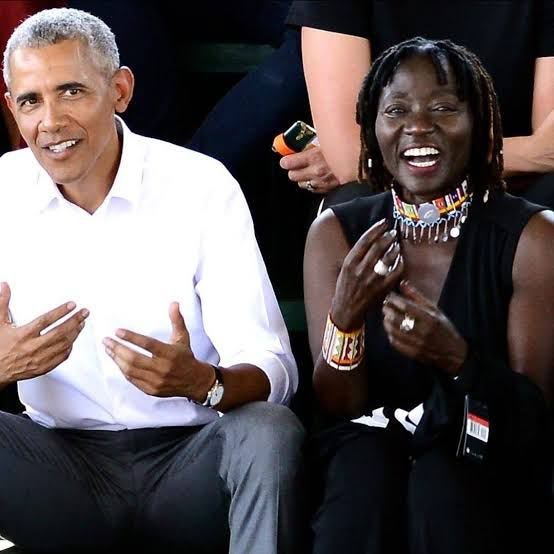
Born in Kenya in 1960, Auma earned her doctorate in education and has spent decades working in international development, with a particular focus on youth empowerment and educational access. Her academic background and lived experience have positioned her uniquely to understand the challenges facing young Africans and to develop practical solutions.
In 2010, Dr. Obama founded the Sauti Kuu Foundation, an organization dedicated to empowering vulnerable youth in Kenya through mentorship, education, and economic opportunity. The name “Sauti Kuu” means “big voices” in Swahili, reflecting the foundation’s mission to amplify the voices of marginalized young people. Through this organization, she has worked tirelessly to provide scholarships, vocational training, and mentorship programs to thousands of youth.
What distinguishes Dr. Obama’s work is her holistic approach to youth development. Rather than viewing education in isolation, she recognizes that young people need comprehensive support—including mental health services, leadership training, and economic empowerment—to truly transform their lives and communities. Her programs address not only academic needs but also the social and emotional dimensions of personal growth.
Beyond her foundation work, Dr. Obama is an accomplished author and speaker. She has written extensively about her family, her experiences, and her vision for Africa’s future. Her memoir, “And Then Life Happens,” offers intimate insights into her journey and her relationship with her famous brother, while also exploring broader themes of identity, belonging, and purpose. Through her writing and public speaking engagements, she has become an influential voice in conversations about education, social justice, and African development.
Dr. Obama’s commitment has consistently emphasized that young people need role models and guides who understand their contexts and can help them navigate the challenges they face. This philosophy underpins all of her work, whether through the Sauti Kuu Foundation or her various speaking and writing endeavors.
Dr. Obama has received numerous awards and accolades for her work in education and social development. However, her greatest satisfaction comes not from recognition, but from witnessing the tangible impact of her work—seeing young people graduate, secure employment, and become leaders in their own communities.
In recent years, Dr. Obama has expanded her reach, working on various international development projects and continuing to advocate for educational access and youth empowerment on a global scale. She has collaborated with organizations and governments to develop sustainable models for youth development that can be replicated across different contexts.
As Africa continues to develop and young people seek pathways to success, Dr. Obama’s contributions to education and mentorship will undoubtedly continue to shape the continent’s future for generations to come.
Today In Black History
In 1807, the Act Prohibiting the Importation of Slaves was passed and signed by President Thomas Jefferson, himself a slave owner. The Act was effective on January 1, 1808, and aimed to stop the importation of enslaved people from foreign countries into any port or place within U.S. jurisdiction.
In 1865, the Freedmen’s Bureau was founded for Black education.
In 1867, elections were ordered for constitutional conventions, and freed Black men were enfranchised.
In 1867, Congress passed the first of a series of Reconstruction Acts, dividing the former Confederate states into five military districts under the command of army generals.
In 1867, Howard University (HU) was founded in Washington, D.C. It was named for General Oliver Otis Howard, the head of the post-Civil War Freedmen’s Bureau, who influenced Congress to appropriate funds for the school.
In 1888, the Capital Savings Bank of Washington, D.C., the first Black bank, opened in Washington, D.C.
In 1917, the Jones Act created the U.S. territory of Puerto Rico and granted U.S. citizenship to Puerto Ricans.
In 1919, Claude Albert Barnett founded the Associated Negro Press.
In 1921, Harry Pace founded the Pace Phonograph Corporation, the first Black-owned and operated record company.
In 1956, the African nation of Morocco became independent from France, although it had existed since 788 CE.
In 1961, Dr. Clifton R. Wharton was sworn in as ambassador to Norway.
In 1970, the white government of Rhodesia declared itself a republic.
In 1972, Dr. Jerome H. Holland became the first Black person elected to the board of directors of the New York Stock Exchange.
In 1977, Rev. Joseph E. Lowery was named acting president of the Southern Christian Leadership Council (SCLC), succeeding Rev. Ralph D. Abernathy.
In 2021, Dr. Seuss Enterprises ceased publication of six Dr. Seuss books due to racist and insensitive imagery.
You are also welcome to view “We Are Speaking” in Substack Notes. You can also read other Substack publications without subscribing to them when you join Notes.