Independent Authors and Creative Professionals: Check out my valuable books and courses on Branding and Marketing just for you via Pam Speaks 2 You.
We appreciate your support!
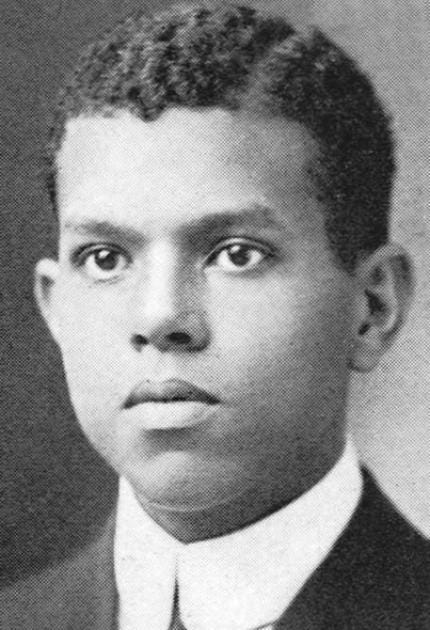
David Nelson Crosthwait, Jr., pioneered the heating, ventilation, and air conditioning (HVAC) industry. His career included groundbreaking efforts in engineering, invention, writing, and teaching, which redefined the technology of indoor climate control.
Crosthwait was born in Nashville, Tennessee, in 1898. He grew up in Kansas City, Missouri, where his father worked as a biology and chemistry teacher and became principal of the city’s first Black high school. Crosthwait earned a full academic scholarship to Purdue University, where he studied mechanical engineering, earning his bachelor’s degree in 1913 and his master’s degree in 1920.
After completing his degrees, Crosthwait joined C.A. Dunham Co. (now Dunham Bush) in Marshalltown, Iowa, in 1925. Founded in 1894, the company is one of the world's oldest commercial heating and air conditioning unit manufacturers. He worked as a research engineer and became the company’s director of research laboratories in 1930.
During the 1920s and 1930s, Crosthwait’s innovative solutions to heating and ventilation problems led him to be commissioned to design systems for high-profile projects. Most significantly, he designed the steam system used to heat Radio City Music Hall at Rockefeller Center in New York City.
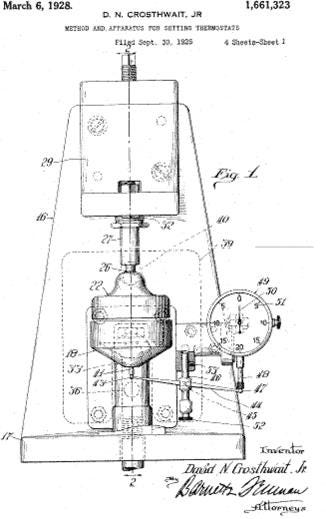
Crosthwait earned 39 U.S. patents and 80 international patents. His inventions spanned the HVAC industry and beyond, including innovations in refrigeration, auto turn signals, thermostat controls, vacuum pumps, and more.
A regularly published author in heating and ventilation industry publications, Crosthwait contributed chapters to the American Society of Heating, Refrigerating and Air Conditioning Engineers Guide. He also authored a manual on heating and cooling with water and contributed to many guides, standards, and codes for HVAC and refrigeration systems.
After more than 40 years at Dunham Bush, where he had become the technical adviser, Crosthwait retired in 1971.
After retiring, Crosthwait continued to teach courses on steam heating theory and control systems at Purdue, which awarded him an honorary doctorate in 1975.
Dr. Crosthwait was named a fellow of the American Society for the Advancement of Science and was a member of the American Chemical Society and the National Society of Professional Engineers. In 1971, he became the first Black fellow of the American Society of Heating, Refrigeration and Air Conditioning Engineers.
Dr. Crosthwait died on February 25, 1976, at age 77.
Today In Black History
In 1789, William Wilberforce made his first major speech on abolition in the UK House of Commons, alleging that the slave trade was morally reprehensible and an issue of natural justice.
In 1898, Louisiana adopted the “grandfather clause,” which stated that a person could vote if his grandfather was eligible to vote, to eliminate Black voters.
In 1910, the second conference of the NAACP was held in New York City.
In 1967, H. Rap Brown replaced Stokely Carmichael as the Student Nonviolent Coordinating Committee (SNCC) chairman.
All “We Are Speaking” posts are now free for everyone to read, and commenting on our posts is now open to everyone!
You are also welcome to view “We Are Speaking” in Substack Notes. You can also read other Substack publications without subscribing to them when you join Notes.
As I read this it occurred to me that these career accomplishments would be remarkable accomplishments in a regular, ordinary , dare I say “utopian world” of equal opportunities to excel academically but in this case , when placed in it’s historical societal context it is highly extraordinary . Incredible really.






As I read this it occurred to me that these career accomplishments would be remarkable accomplishments in a regular, ordinary , dare I say “utopian world” of equal opportunities to excel academically but in this case , when placed in it’s historical societal context it is highly extraordinary . Incredible really.
Interesting