Issue #1,028 Today In Black History, Monday, May 18, 2026
THANK YOU to all of our wonderful subscribers!
Our goal is to make “We Are Speaking” a best-selling publication by December 31, 2026, increasing our reach and influence! To achieve our goal, we will need 15 new paid subscribers every week, or 5 new paid subscribers for each of the three days per week we publish. If you value our publication, please consider becoming a paid subscriber for just $5/month or $50/year. We appreciate your financial support! We appreciate your financial support!
All new subscribers (free and paid) will receive this valuable eBook! If you don’t have yours, download it below.
Reclaiming The Narrative Why Learning Black History Changes Everything Generic Copy
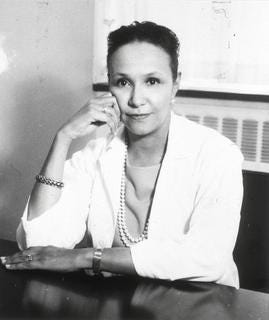
Dr. Jane Cooke Wright stands as one of the most remarkable pioneers in medical science and cancer research. Born on November 30, 1919, this trailblazing African American physician revolutionized how the world approaches cancer treatment. Her groundbreaking work in chemotherapy research continues to influence oncology practice today.
Jane’s father, Dr. Louis Tompkins Wright, was himself a renowned surgeon and a pioneering figure in African American medicine. Jane developed a deep passion for medicine and a commitment to advancing human health. She earned her medical degree from New York Medical College in 1945, at a time when the medical field was overwhelmingly male and predominantly white.
Dr. Wright’s most significant contributions came through her innovative work in cancer chemotherapy during the 1950s and 1960s. While many researchers were focused on radiation and surgery as primary cancer treatments, she boldly pursued the potential of chemical compounds to fight the disease. She developed new methods for testing cancer drugs and pioneered the use of methotrexate and other chemotherapy agents to treat various cancers.
Perhaps most impressively, she achieved remarkable remission rates in childhood leukemia—a disease that was previously considered essentially untreatable. Her work gave hope to families and transformed cancer from what seemed like an inevitable death sentence into a disease that could be managed and, in many cases, overcome.
Beyond her laboratory achievements, Dr. Wright was a dedicated clinical physician and educator. She served as an associate professor of surgery at New York Medical College and was the director of the cancer research foundation at her institution. She believed that research should ultimately serve humanity, and she never lost sight of the human beings behind the statistics and medical data.
Dr. Wright was named one of the top ten women physicians in the United States and received the Mademoiselle magazine award for outstanding achievement. Her research was published in prestigious medical journals and presented at international conferences. However, what truly defined her legacy was the impact of her work on actual patient outcomes and the doors she opened for other African American physicians and women in medicine.
Throughout her career, Dr. Wright faced discrimination and obstacles that many of her white, male counterparts never encountered. Yet she used those barriers as motivation to excel and to prove that talent, dedication, and intelligence know no color or gender. She became a mentor to younger physicians and actively worked to create opportunities for underrepresented groups in medicine.
Dr. Jane Cooke Wright retired from active practice in 1967 but continued to influence the medical field through her legacy. She passed away on January 26, 2013, at the age of 93, leaving behind a lifetime of achievements that fundamentally changed cancer treatment. Her innovative approach to chemotherapy, her dedication to clinical excellence, and her unwavering commitment to advancing medicine for all people make her an inspiring figure in both the history of medicine and the history of African American achievement.
Today In Black History
In 1652, Rhode Island enacted the first law declaring slavery illegal.
In 1869, Robert Tanner Freeman became the 1st African American to graduate from Harvard Dental School.
In 1896, the U.S. Supreme Court decision in Plessy v. Ferguson upheld the doctrine of “separate but equal” in education and public accommodations and began the age of “Jim Crow.”
In 1983, the U.S. Senate revised the immigration laws, giving millions of illegal aliens legal status under an amnesty program.
In 1991, the Republic of Somaliland declared independence from Somalia.
In 2000, the South Carolina General Assembly voted to remove the Confederate flag from the dome in the capital of South Carolina.
Our goal is to make “We Are Speaking” a best-selling publication by December 31, 2026, increasing our reach and influence! To achieve our goal, we will need 15 new paid subscribers every week, or 5 new paid subscribers for each of the three days per week we publish. If you value our publication, please consider becoming a paid subscriber for just $5/month or $50/year. We appreciate your financial support! We appreciate your financial support!
You are also welcome to view “We Are Speaking” in Substack Notes. You can also read other Substack publications without subscribing to them when you join Notes.