

Issue #1055 Today In Black History Wednesday, July 29, 2026
Please scroll to the end of this post to support us by subscribing at the free or paid level.
Independent authors and creative professionals! Please scroll to the “Shameless Plug” at the end to find out about the Pam Speaks 2 You Creative Business Community app for creative branding and marketing.
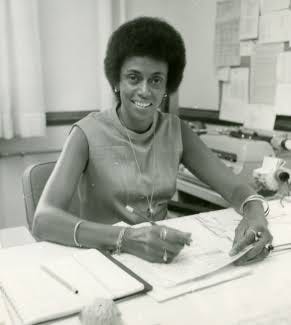
Dr. Jewel Plummer Cobb spent a lifetime proving that a laboratory bench and a college presidency could belong to the same career — and that neither had to wait for permission.
Born January 17, 1924, in Chicago, Jewel Isadora Plummer grew up surrounded by science. Her father, Frank Plummer, was the first Black graduate of Harvard Medical School and practiced as a dermatologist; his home library sparked her early curiosity. That curiosity turned into a calling in high school, the first time she looked through a microscope in biology class. She enrolled at the University of Michigan but left after encountering segregated student housing, transferring to Talladega College in Alabama, where she finished her biology degree in just three years. New York University initially denied her a graduate fellowship — reportedly because of her race — but reversed course after an interview. She earned her master’s there in 1947 and her Ph.D. in cell physiology in 1950, with a dissertation on the mechanisms of melanin pigment formation.
That early focus on pigment cells shaped the rest of Cobb’s scientific career. Working alongside researchers including oncologist Dr. Jane C. Wright, Cobb spent the 1950s and ‘60s developing techniques for culturing human cancer cells in tissue culture, then testing chemotherapy agents against them. Her work helped establish that methotrexate could treat certain skin cancers, lung cancers, and childhood leukemia — a drug still used in cancer and autoimmune treatment today. She was also the first researcher to publish data showing that actinomycin D reduced nucleoli in both normal and malignant human cells. Her research took her to international cancer congresses in London and Moscow and to a fellowship in Naples, Italy, and it was supported by grants from the National Cancer Institute, the National Science Foundation, and the American Cancer Society.
Cobb’s career moved fluidly between the lab and the lectern: teaching posts at NYU, the University of Illinois College of Medicine, Hunter College, and a decade running the biology lab at Sarah Lawrence College. In 1969 she became Dean of Arts and Sciences at Connecticut College — the first Black dean in the college’s history — where she created a scholarship program for Black undergraduates and a post-baccalaureate pre-med program that sent students on to Yale, Georgetown, and beyond. After a stint as dean at Rutgers’ Douglass College, Cobb reached a milestone in 1981: she was named president of California State University, Fullerton, becoming the first African American woman to lead a major research university. Over nine years, she expanded the campus’s science and engineering facilities, built its first student housing, and pushed research as a campus priority, even when it drew pushback from faculty who saw teaching as the university’s only mission.
Beyond her own research and administration, Cobb became one of the country’s most persistent voices for women and scientists of color trying to enter fields that weren’t built for them. Her 1979 essay “Filters for Women in Science” used the metaphor of a filter’s pore size to describe how systemic barriers narrowed who made it through to a science career. She chaired a national conference of minority women scientists that produced the influential 1975 report “The Double Bind: The Price of Being a Minority Woman in Science.”
Her honors reflect a career that spanned two worlds: election to the Institute of Medicine of the National Academy of Sciences in 1974, membership on the National Science Board, the Candace Award from the National Coalition of 100 Black Women, more than 20 honorary doctorates, and, in 2021, a road at the Marine Biological Laboratory in Woods Hole renamed in her honor.
Dr. Jewel Plummer Cobb died January 1, 2017, in Maplewood, New Jersey, at age 92. A former student once said of her: “I would not have become a doctor. Because of her, I knew it was possible.” That’s the throughline of her life — proof, in the lab and at the podium, of what was possible.
Sources
Jewel Plummer Cobb, Biologist and Educator, African American Registry
Jewel Plummer Cobb, Marine Biological Laboratory
Jewel Isadora Plummer Cobb: Biologist and College President, Undark
Jewel Plummer Cobb, Mothers in Science
Jewel Plummer Cobb, 92, Dies; Led a California Campus, The New York Times
Today In Black History
In 1794, Mother Bethel African Methodist Episcopal (AME) Church was founded in Philadelphia by Absalom Jones and Richard Allen, a former slave and itinerant preacher, because the white church he attended started segregating its parishes because Bishop Allen’s sermons were so popular.
In 1870, George Dixon, an Afro-Canadian born in Halifax, Nova Scotia, became the first Black person to hold the world title in boxing.
In 1918, the National Liberty Congress of Colored Americans asked Congress to make lynching a federal crime.
In 1919, the first convention of the National Association of Negro Musicians was held in Chicago and awarded its first scholarship to a young Marian Anderson.
In 1991, Bernard A. Harris, Jr., a NASA clinical scientist and flight surgeon, officially became a NASA astronaut.
Paid subscribers can always leave questions in the comments or email us.
Please consider becoming a paid subscriber for $10/month or less to access all of the articles and other benefits.


If you are an independent author or creative professional, this is your chance to join the Pam Speaks 2 You Creative Business Community, and there’s an app for that!
The Pam Speaks 2 You Apple/iOS app is live!
The Pam Speaks 2 You Google/Android app is live!
You can also access the Pam Speaks 2 You app on the web!