

Issue #1064: Today In Black History, Wednesday, August 19, 2026
As a small Substack publication, we could really use your support!
Please scroll to the end of this post , or enter your email below to support us by subscribing at the free or paid level for less than $10/month.
Independent authors and creative professionals! Please scroll to the “Shameless Plug” at the end to find out about the Pam Speaks 2 You Creative Business Community app for creative branding and marketing.
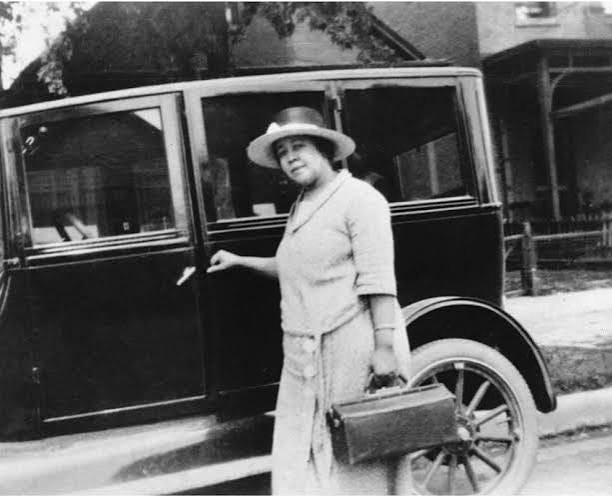
Justina Ford delivered nearly 7,000 babies over a fifty-year medical career, almost all of them from a home office no hospital would let her practice in. Born Justina Laurena Warren on January 22, 1871, in Knoxville, Illinois, to parents who had been enslaved, she grew up trailing her mother, a nurse, on rounds through poor neighborhoods — an early education in medicine that stuck. She graduated from the integrated Galesburg High School in 1890, married Baptist minister John Ford in 1892, and enrolled at Hering Medical College in Chicago, earning her medical degree in 1899.
A License Against the Odds
Ford and her husband moved briefly to Alabama, where John pastored a church, before relocating to Denver in 1902 so he could lead Zion Baptist Church. That October, Ford sat for Colorado’s medical licensing exam. She passed, becoming the state’s first licensed Black woman physician, but the examiner made clear what she was up against, reportedly telling her, “I’d feel dishonest taking a fee from you. You’ve got two strikes against you.” License number 3800 didn’t open doors — Denver General Hospital and every other hospital in the city refused her admitting privileges on account of her race and sex, a barrier that held for decades.
Fifty Years in Five Points
Shut out of institutional medicine, Ford built her own. She and John bought a two-story brick house in Denver’s Five Points neighborhood and turned it into her practice, seeing patients in converted rooms and making house calls, often on foot, at all hours. She specialized in obstetrics, gynecology, and pediatrics, and over the following half-century she delivered an estimated 7,000 babies. Her patients were the people Denver’s medical establishment wouldn’t touch: Black families, poor white residents, and immigrants who spoke little or no English — Ford reportedly picked up fragments of several languages just to treat them. Many couldn’t pay in cash, so she took what they had, from produce to coal to household help, and she was known to buy groceries herself for families who had none. Patients called her “the Baby Doctor,” and generations of Denver children she delivered came to be known informally as members of the “Justina Baby Club.”
Recognition from her own profession came grudgingly and late. For nearly fifty years, the Colorado Medical Society and the American Medical Association denied her membership, cutting her off from the referrals, hospital access, and professional standing granted to her white peers. It wasn’t until 1950 — two years before her death — that the Denver Medical Society finally admitted her, opening the door to state and national medical societies as well. That same year, the Cosmopolitan Club honored her with its human relations award, a rare formal acknowledgment of a career built almost entirely without institutional support.
Legacy
Justina Ford died October 14, 1952, in Denver at age 81, having practiced medicine continuously from the same Five Points home for half a century. Her impact only grew more visible afterward. In 1985, she was inducted into the Colorado Women’s Hall of Fame. Her former home was relocated and restored to house the Black American West Museum and Heritage Center, with her original office and waiting room preserved inside. Denver’s Ford-Warren Library carries her name, as does a scholarship and medical society established in her honor at the University of Colorado, and a bronze statue of her stands at a Denver light rail station. In 2020, a Littleton elementary school was named for her — a fitting tribute to a woman who spent her life delivering the next generation into a world that tried to keep her out of the room.
Sources: Colorado Encyclopedia; Denver Public Library; UCHealth Today; Colorado Women’s Hall of Fame
Today In Black History
In 1791, Benjamin Banneker, Black astronomer, mathematician, and almanac author, wrote a letter to then-Secretary of State Thomas Jefferson challenging the idea of freedom for whites while Blacks did not enjoy the same freedoms.
In 1950, Edith Sampson became the first African American appointed as a representative to the United Nations.
In 1954, Diplomat and first Black winner of the Nobel Peace Prize Dr. Ralph J. Bunche was named undersecretary of the United Nations.
In 1997, Alexis M. Herman, U.S. Labor Secretary, was instrumental in ending a 15-day United Parcel Service (UPS) strike.
Paid subscribers can always leave questions in the comments or email us.
Please consider becoming a paid subscriber for $10/month or less to access all of the articles and other benefits.



If you are an independent author or creative professional, this is your chance to join the Pam Speaks 2 You Creative Business Community, and there’s an app for that!
The Pam Speaks 2 You Apple/iOS app is live!
The Pam Speaks 2 You Google/Android app is live!
You can also access the Pam Speaks 2 You app on the web!