

Issue #931 Today In Black History, Wednesday, September 24, 2025
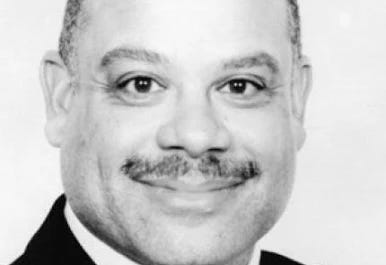
Mark Dean was born on March 2, 1957, in Jefferson City, Tennessee. He graduated from the University of Tennessee with a bachelor’s degree in electrical engineering, followed by a master’s degree from Florida Atlantic University, and later earned a doctorate from Stanford University.
Dr. Dean joined IBM in 1980, at a time when the tech industry was on the cusp of a revolution but still grappling with issues of diversity and representation. Despite these hurdles, Dean excelled and became a key player in the development of the IBM personal computer. He co-invented the ISA bus—a technology that enabled multiple devices, such as modems and printers, to be connected to a computer—a breakthrough that would define the architecture of PCs for years to come.
He helped IBM make instrumental changes in areas ranging from the research and application of systems technology circuits to operating environments.
Perhaps one of Dean’s most significant achievements was being part of the team that developed the IBM PC in 1981. Dean’s work on the project helped democratize computing, making it accessible to businesses and homes alike. The IBM PC’s influence set standards that guided the evolution of personal computing, shaping the industry into what it is today.
Dr. Dean is the first African American to become an IBM Fellow, the highest level of technical excellence at the company. In 1997, he was inducted into the National Inventors Hall of Fame. Also, in 1997, Dean was awarded the Black Engineer of the Year President’s Award. He was elected to the National Academy of Engineering in 2001.
He holds three of IBM’s original nine PC patents and currently holds more than 20 IBM patents in total. One of his most recent computer inventions occurred while he was leading the team that produced the 1-gigahertz chip, which contains one billion transistors and has nearly limitless potential.
Dr. Dean was CTO for IBM Middle East and Africa. He retired from the company in 2013 and became a professor at the University of Tennessee.
Dr. Mark Dean is the John Fisher Distinguished Professor in the Department of Electrical Engineering and Computer Science at the University of Tennessee.
Throughout his career at IBM, Dr. Mark Dean registered over 40 patents. Among these patents is one for the color PC monitor, which moved personal computing beyond text and numbers to the vibrant graphical interfaces we use today.
As an African American in a predominantly white field, Dr. Dean’s success has paved the way for future generations of Black engineers and scientists.
Today In Black History
In 1935, world heavyweight champion Joe Louis became the first Black boxer to draw a million-dollar gate at a fight.
In 1957, President Dwight D. Eisenhower ordered federal troops to Little Rock, Arkansas, to prevent interference with school integration at Central High School.
In 1962, the U.S. Circuit Court of Appeals ordered the Mississippi Board of Higher Education to admit James Meredith or face contempt proceedings.
In 1965, an executive order enforced affirmative action for the first time.
In 1977, Rev. John T. Walker was installed as the first Black bishop of the Episcopal Diocese of Washington.
In 1986, Japanese Prime Minister Yasuhiro Nakasone said that the levels of intelligence in the United States were lower because of Blacks, Puerto Ricans, and Hispanics. He later apologized, saying that his words were “misinterpreted.”
In 1988, Rev. Barbara C. Harris became the first female Bishop of the Episcopal Church.
In 2016, the U.S. National Museum of African History and Culture, established by an Act of Congress in 2003, opened in Washington, D.C.
Help us to reach our September, 2025 goals: +200 total new subscribers and +60 new paid subscribers:
Please share and subscribe to help us grow this publication.
If you like us, REALLY like us, please click the little heart “Like” button at the top of this post!

Buttons:
We Are Speaking is a reader-supported publication. To receive new posts and support our work, consider becoming a free or paid subscriber.

