

Issue #969 Today In Black History, Wednesday, December 17, 2025
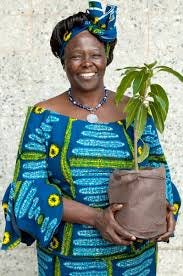
Dr. Wangari Maathai was a Kenyan environmental and political activist who became one of Africa’s most influential voices for conservation and social justice. Her groundbreaking work earned her the Nobel Peace Prize in 2004, making her the first African woman to receive this prestigious honor.
Maathai was born on April 1, 1940, in the central highlands of the then-British colony of Kenya.
Wangari Maathai’s education was groundbreaking: she was the first woman in East & Central Africa with a PhD (from the University of Nairobi) and the first female professor in Kenya, holding degrees in biological sciences from Mount St. Scholastica College (Kansas) and the University of Pittsburgh, setting a path for women in science and leadership through scholarships like the Kennedy Airlift, culminating in her work with the Green Belt Movement and Nobel Peace Prize.
She won the Nobel Peace Prize for her “holistic approach to sustainable development that embraces democracy, human rights, and women’s rights in particular.”
In 1977, Dr. Maathai founded the Green Belt Movement, a grassroots organization dedicated to planting trees and combating deforestation in Kenya. What began as a modest initiative to address environmental degradation evolved into a powerful movement that empowered communities—particularly women—to take action against ecological destruction. The movement has since planted over 51 million trees across Africa and inspired similar initiatives worldwide.
In 1977, she launched the Green Belt Movement to reforest her country while supporting women in the nation. “Women needed income, and they needed resources because theirs were being depleted,” Maathai explained to People magazine. “So we decided to solve both problems together.”
The movement has been very successful, providing roughly 30,000 women with new skills and opportunities. Maathai also challenged the government on its development plans and its handling of the country’s land. One of her most famous actions was in 1989. Maathai and her organization staged a protest in Nairobi’s Uhuru Park to prevent the construction of a skyscraper. Her campaign drew international attention, and the project was eventually dropped. The place in the park where she demonstrated became known as “Freedom Corner.”
Dr. Maathai was also a vocal advocate for democracy, human rights, and women’s empowerment in Kenya. During periods of political repression, she faced imprisonment, harassment, and violence for her courageous stands.
In 2009, she published “The Challenge for Africa,” which offered insights into the strengths and weaknesses of governance in Africa, her own experiences, and the centrality of environmental protection to Africa’s future.
Time magazine chose Dr. Wangari Maathai for its “Women of the Year” cover for 2001.
Wangari Maathai died in Kenya on September 25, 2011, of complications arising from ovarian cancer. Her remains were cremated and buried at the Wangari Maathai Institute for Peace and Environmental Studies in Nairobi.
Today In Black History
In 1916, George and Nobel Johnson founded the Lincoln Motion Picture Company, the first Black-owned movie production company. Their first movie was titled “The Realization of a Negro Ambition.”
In 1957, the last episode of the “Nat King Cole Show” aired on NBC. It was cancelled due to a lack of national sponsorship.
In 1991, Michael Jordan was named the Sports Illustrated Sportsman of the Year.
In 1992, Jesse Brown, Director of Disabled Veterans of America, was named Secretary of Veterans’ Affairs by President Bill Clinton.