

Issue #1,010 Today In Black History, Monday, March 30, 2026
Our goal is to make “We Are Speaking” a best-selling publication by July 1, 2026, increasing our reach and influence! To achieve our goal, we will need 15 new paid subscribers every week, or 5 new paid subscribers for each of the three days per week we publish. If you value our publication, please consider becoming a paid subscriber for just $5/month or $50/year. We appreciate your financial support! We appreciate your financial support!
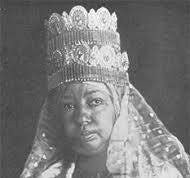
Ethiopian Empress Taytu Betul stands as one of Africa’s most influential and formidable women, whose strategic intellect and military prowess shaped the destiny of her nation during a critical period of colonial expansion. Born in 1840, Taytu ultimately became empress from 1889 to 1913, and one of the key architects of Ethiopia’s resistance against European imperialism.
As the third wife of Emperor Menelik II, who was her fourth husband, Taytu wielded considerable influence over state affairs at a time when few women held any political power. She was also a military strategist, a political advisor, and a fierce patriot who actively participated in governance decisions. During the Italo-Ethiopian War (1895-1896), Taytu, meaning “sun” in Amharic, proved instrumental in mobilizing support for the Ethiopian cause.
Taytu’s influence also strengthened the Ethiopian Orthodox Church’s role in national life and promoted education. She was known for her intelligence, her command of multiple languages, and her diplomatic acumen. Just as her husband, Emperor Menelik II, was about to sign an “understanding” to set up Ethiopia as a “protectorate” of Italy, Taytu grabbed the documents, written in Italian and Amharic, and tore them up because she saw them for what they really were: an attempt by Italy to colonize Ethiopia.
Taytu’s most celebrated achievement was her pivotal role at the Battle of Adwa on March 1, 1896. This decisive victory against the Italian army not only secured Ethiopian independence but also became a symbol of African resistance against colonialism. Taytu personally led troops into battle, and her actions during that time demonstrated that gender was no barrier to leadership during moments requiring the nation’s defense.
The Ethiopian victory at Adwa stands out globally as one of the few instances where an African nation successfully repelled a European colonial power, earning Taytu a place among history’s greatest military leaders. Ethiopia is the only African nation that was never colonized by Europe.
Taytu Betul also founded Addis Ababa, Ethiopia’s current capital city.
Taytu’s legacy symbolized the potential for women’s leadership and agency during an era when such visibility was extraordinary. She challenged prevailing assumptions about women’s capabilities and demonstrated that history’s crucial turning points can pivot on the decisions and actions of women. Her example inspired subsequent generations of African women to claim space in public and political life.
Taytu Betul’s life reminds us that history’s great movements are often shaped by the contributions of women whose names deserve to be remembered alongside the most celebrated figures of their era. Today, Taytu Betul is honored as a national hero in Ethiopia, a symbol of resistance, courage, and the indomitable spirit that preserved African independence.
Today In Black History
In 1870, the 15th Amendment to the Constitution was ratified, giving Black men the right to vote.
In 1912, the French protectorate in Morocco was established.
In 1941, the National Urban League presented a one-hour program over a national radio network, urging equal protection for Blacks in the national defense program.
In 1960, 18 Southern University students were suspended for their involvement in lunch counter sit-ins and anti-segregation rallies.
In 1963, Captain Edward J. Dwight, Jr. became the first Black candidate for astronaut training.
In 2013, Kenya’s Supreme Court declared Uhuru Kenyatta the rightful winner of the Kenyan presidential election.
Our goal is to make “We Are Speaking” a best-selling publication by July 1, 2026, increasing our reach and influence! To achieve our goal, we will need 15 new paid subscribers every week, or 5 new paid subscribers for each of the three days per week we publish. If you value our publication, please consider becoming a paid subscriber for just $5/month or $50/year. We appreciate your financial support! We appreciate your financial support!
You are also welcome to view “We Are Speaking” in Substack Notes. You can also read other Substack publications without subscribing to them when you join Notes.

Great article! Thank you!