Issue #1,023 Today In Black History, Wednesday, April 29, 2026
THANK YOU to all of our wonderful subscribers!
Our goal is to make “We Are Speaking” a best-selling publication by July 1, 2026, increasing our reach and influence! To achieve our goal, we will need 15 new paid subscribers every week, or 5 new paid subscribers for each of the three days per week we publish. If you value our publication, please consider becoming a paid subscriber for just $5/month or $50/year. We appreciate your financial support! We appreciate your financial support!
All new subscribers (free and paid) will receive this valuable eBook! If you don’t have yours, download it below.
Reclaiming The Narrative Why Learning Black History Changes Everything Generic Copy
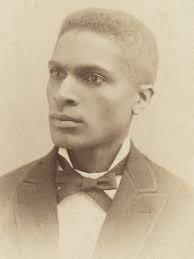
Frederick Lamar McGhee, born into slavery, was Minnesota’s first African American lawyer, its most consequential early civil rights leader, a renowned orator, and a criminal defense lawyer famous for his courtroom victories. His break with Booker T. Washington and subsequent alliance with W. E. B. Du Bois led to the founding of the Niagara Movement and then the NAACP.
Frederick McGhee was born on October 28, 1861, in Aberdeen, MS. Both of his parents died young, so as a teenager Fredrick followed his brothers, Matthew and Barclay, to Chicago.
In Chicago McGhee was an attorney in the offices of Chicago’s most distinguished Black lawyer, Edward H. Morris. He also met and married the Kentucky-born Mattie Crane.
In 1889, probably at the insistence of St. Paul newspaper publisher John Q. Adams, McGhee moved to St. Paul. When admitted to the bar in June, he became Minnesota’s first African American lawyer.
McGhee became a passionate defender of civil rights during a particularly challenging era. He was instrumental in organizing and leading the Afro-American League of Minnesota, an early civil rights organization dedicated to combating discrimination and advocating for equal treatment under the law. Through this organization and his legal work, he challenged unjust laws and practices that disenfranchised African Americans, particularly addressing issues of voting rights, employment discrimination, and access to public accommodations.
This was the Jim Crow era, and McGhee participated in every national civil rights organization that strove to find a way to fight racial discrimination. The most prominent of these at the turn of the century was the National Afro-American Council, for which he served as an officer. He arranged for its 1902 convention to be held in St. Paul, and for Booker T. Washington, the preeminent Black leader of the time, to attend. However, as Washington took control of the organization. McGhee publicly broke with him in 1903, and was soon joined by W. E. B. DuBois. With other dissenters, they formed, in 1905, the Niagara Movement, which advocated immediate and full equality of Black Americans. In 1909, Niagara morphed into the NAACP, led by DuBois.
One of McGhee’s most notable contributions was his involvement in cases challenging the separate-but-equal doctrine that had taken hold in American law. He understood that legal segregation was fundamentally unjust and worked tirelessly to expose its inherent inequality. His legal arguments anticipated civil rights positions that would gain broader acceptance decades later, demonstrating remarkable foresight and moral clarity.
McGhee believed that the Constitution’s promises of equal protection and due process should apply to all Americans, regardless of race. His ability to articulate the case for civil rights in compelling, accessible language made him an effective advocate both in and out of the courtroom.
In his personal life, McGhee was a family man (he and his wife had one adopted daughter), a churchgoer, a homeowner (in Frogtown, near the corner of University and Dale), and the owner of a cabin on the Apple River in Wisconsin. It was there in the summer of 1912 that he suffered an accident that led to a blood clot, and then an embolism that killed him a few weeks short of his fifty-first birthday.
McGhee was also an eloquent writer and public speaker who used his platform to educate the public about the injustices facing African Americans. He published articles, delivered speeches, and engaged in public debates, always maintaining a thoughtful, reasoned approach while refusing to compromise on fundamental principles. His ability to articulate the case for civil rights in compelling, accessible language made him an effective advocate both in and out of the courtroom.
Frederick Lamar McGhee passed away in 1912, but his legacy endures as a testament to the power of individual courage and professional excellence in the service of justice. He demonstrated that African American lawyers could command respect in their field and use their legal knowledge to advance the cause of racial equality. His pioneering efforts helped establish a tradition of Black legal activism that would grow stronger throughout the twentieth century.
Today In Black History
In 1845, Macon B. Allen and Robert Morris, Jr. became the first African Americans to open a law practice in the United States.
In 1854, Ashmun Institute (later Lincoln University) received its charter from the Commonwealth of Pennsylvania, becoming the 1st Black degree-granting college in the United States.
In 1890, Black inventor Henry Faulkner patented the ventilated shoe, placing holes in specific locations within the shoe, allowing for adequate circulation and greater comfort.
In 1967, Aretha Franklin released the single “Respect,” written by Otis Redding, which was the Billboard Song of the Year.
In 1968, Rev. Ralph Abernathy, in his role as president of the SCLS, began the Poor People’s Campaign, leading a delegation of leaders representing poor whites, Black, Native Americans, and Latinos to Capitol Hill for conferences with cabinet members and congressional leaders.
In 1977, author Alex P. Haley won the Pulitzer Prize for his book “Roots.”
In 1983, Harold Washington was sworn in as the first Black mayor of Chicago, IL.
In 1992, the L.A. riots began, sparked by the acquittal of four white police officers in the beating of Rodney King. There were about 50 deaths and up to $1 Billion in property damage.
Our goal is to make “We Are Speaking” a best-selling publication by July 1, 2026, increasing our reach and influence! To achieve our goal, we will need 15 new paid subscribers every week, or 5 new paid subscribers for each of the three days per week we publish. If you value our publication, please consider becoming a paid subscriber for just $5/month or $50/year. We appreciate your financial support! We appreciate your financial support!
You are also welcome to view “We Are Speaking” in Substack Notes. You can also read other Substack publications without subscribing to them when you join Notes.