Issue #1,026 Today In Black History, Wednesday, May 6, 2026
THANK YOU to all of our wonderful subscribers!
Our goal is to make “We Are Speaking” a best-selling publication by July 1, 2026, increasing our reach and influence! To achieve our goal, we will need 15 new paid subscribers every week, or 5 new paid subscribers for each of the three days per week we publish. If you value our publication, please consider becoming a paid subscriber for just $5/month or $50/year. We appreciate your financial support! We appreciate your financial support!
All new subscribers (free and paid) will receive this valuable eBook! If you don’t have yours, download it below.
Reclaiming The Narrative Why Learning Black History Changes Everything Generic Copy
From before the founding of the United States through the Civil War, enslaved Africans didn’t just accept their lot in life. Many used various strategies and schemes to gain freedom for themselves and their families.
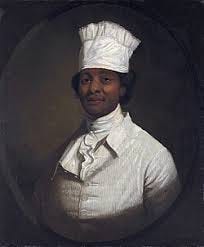
Hercules Posey was one of those enslaved people. He was the official presidential chef who outsmarted his owner, President George Washington, and asserted his own freedom in Philadelphia, then the capital of the United States.
He commanded a kitchen with the authority of a general. He dressed like a gentleman, walked with the confidence of a free man, and cooked meals that dazzled the elite of a new nation. Yet Hercules Posey was enslaved — the property of George Washington, the very man who proclaimed liberty as America’s founding ideal. His story is one of extraordinary talent, quiet resistance, and an act of defiance that Washington never forgot.
Hercules came to Mount Vernon as an enslaved field worker, but by the late 1780s, he had become Washington’s head chef, overseeing the preparation of elaborate meals for one of America’s most powerful households. When Washington assumed the presidency and moved to Philadelphia — then the nation’s capital — Hercules moved with him, running the kitchen at the President’s House on High Street.
Contemporary accounts describe him as a commanding presence: immaculately dressed in a blue cloth coat, a long white apron, and a black velvet cap. He was known to scold kitchen workers who crossed him and to move through the city’s markets with an air of authority that turned heads. To those who didn’t know his status, he could easily have been mistaken for a prosperous free man of Philadelphia.
Washington trusted Hercules to an unusual degree. He was granted the rare privilege of selling kitchen drippings and leftover scraps from the presidential kitchen, pocketing the profits for himself. This income allowed him to dress well and move about the city with a degree of independence nearly unheard of for enslaved people of the era. He used that freedom wisely — gathering information, cultivating contacts, and quietly building the conditions for something larger.
What Washington likely did not consider was that his own laws would work against him. Pennsylvania had passed the Gradual Abolition Act of 1780, which stated that any enslaved person residing in the state for six consecutive months would be legally entitled to freedom. To prevent this, Washington rotated his enslaved staff back to Virginia before that threshold could be reached — a calculated move to maintain his human property while appearing to honor Pennsylvania law. Hercules was subject to these rotations.
So on February 22, 1797 — George Washington’s 65th birthday — Hercules vanished. He walked away from Mount Vernon while Washington himself was in Philadelphia, and he was never found. It was a masterpiece of planning.
Washington was stunned. But he was gone — almost certainly to Philadelphia, where he had connections and could blend into the city’s substantial free Black community.
In the years that followed, a visitor to Mount Vernon reportedly asked Hercules’s young daughter, Evey, if she was sad her father had left. She replied that she was glad — because her father was now free.
For generations, Hercules Posey was a footnote in Washington’s story. Now he is recognized as a man who managed his own circumstances. Hercules Posey did not wait to be freed. He freed himself.
Today In Black History
In 1626, Dutch colonist Peter Minuit organized the purchase of Manhattan Island for 60 gilders of goods from the Canarsie Indians of the Lenape.
In 1787, African Lodge No. 459 was organized in Boston, MA, with Prince Hall as Master.
In 1794, General Toussaint Louverture switched sides and ambushed his former Spanish allies at Saint-Raphaël in Haiti.
In 1861, Arkansas and Tennessee became the 9th and 10th states to secede from the United States.
In 1886, Black inventor M.A. Cherry patented the tricycle.
In 1960, President Eisenhower signed the Civil Rights Act.
In 1967, four hundred students seized the administration building at HBCU Cheney State College in Pennsylvania.
In 1969, Howard Lee was elected mayor of Chapel Hill, NC, becoming the first Black person elected mayor of a predominantly white North Carolina city in modern times.
In 1994, Nelson Mandela and the African National Congress (ANC) were confirmed the winners in South Africa’s first post-apartheid election.
Our goal is to make “We Are Speaking” a best-selling publication by July 1, 2026, increasing our reach and influence! To achieve our goal, we will need 15 new paid subscribers every week, or 5 new paid subscribers for each of the three days per week we publish. If you value our publication, please consider becoming a paid subscriber for just $5/month or $50/year. We appreciate your financial support! We appreciate your financial support!
You are also welcome to view “We Are Speaking” in Substack Notes. You can also read other Substack publications without subscribing to them when you join Notes.