Issue #939 Today In Black History, Wednesday, October 8, 2025
We don’t have any commerical ads, but please check out the information at the bottom of this post for important information about how to support our businesses!
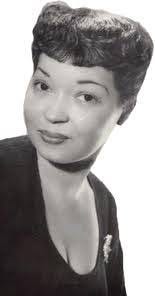
Jackie Ormes was born Zelda Mavin Jackson on August 1, 1911, in Pittsburgh, Pennsylvania. Ormes made history as the first African-American woman cartoonist, who often commented on the social issues of her time.
Ormes started in journalism as a proofreader for the Pittsburgh Courier. She also worked as an editor and as a freelance writer, writing on police beats, court cases, and human-interest topics.
In 1937, Ormes debuted her first comic strip, “Torchy Brown in Dixie to Harlem,” in the Pittsburgh Courier, one of the nation’s leading Black newspapers. The strip followed the adventures of Torchy Brown, a young, ambitious Southern girl who migrated to the North to pursue her dreams.
The Courier had fourteen city editions, meaning Ormes’ work was indeed read from coast to coast. The strip, starring Torchy Brown, was a humorous depiction of a Mississippi teen who found fame and fortune singing and dancing in the Cotton Club. Torchy’s journey from Mississippi to New York City mirrored the experiences of many African Americans who migrated north during the Great Migration.
Through Torchy’s eyes, Ormes explored themes of racial injustice, migration, and empowerment, all while entertaining her audience with Torchy’s lively escapades.
Ormes continued to break new ground with her next project, “Candy,” a single-panel cartoon about a wisecracking, savvy Black maid, which appeared in the Chicago Defender in 1945. She achieved further acclaim with “Patty-Jo ‘n’ Ginger,” a single-panel cartoon that ran from 1945 to 1956, noted for its sharp political satire and social commentary. The series centered around two sisters, with the younger, Patty-Jo, often serving as the voice of reason and humor, addressing issues such as segregation and McCarthyism.
The single-panel cartoon featured a big sister-little sister set-up, with the precocious, insightful, and socially/politically-aware child as the only speaker and the beautiful adult woman as a sometime pin-up figure and fashion mannequin. The strip ran from September 1, 1945, to September 22, 1956.
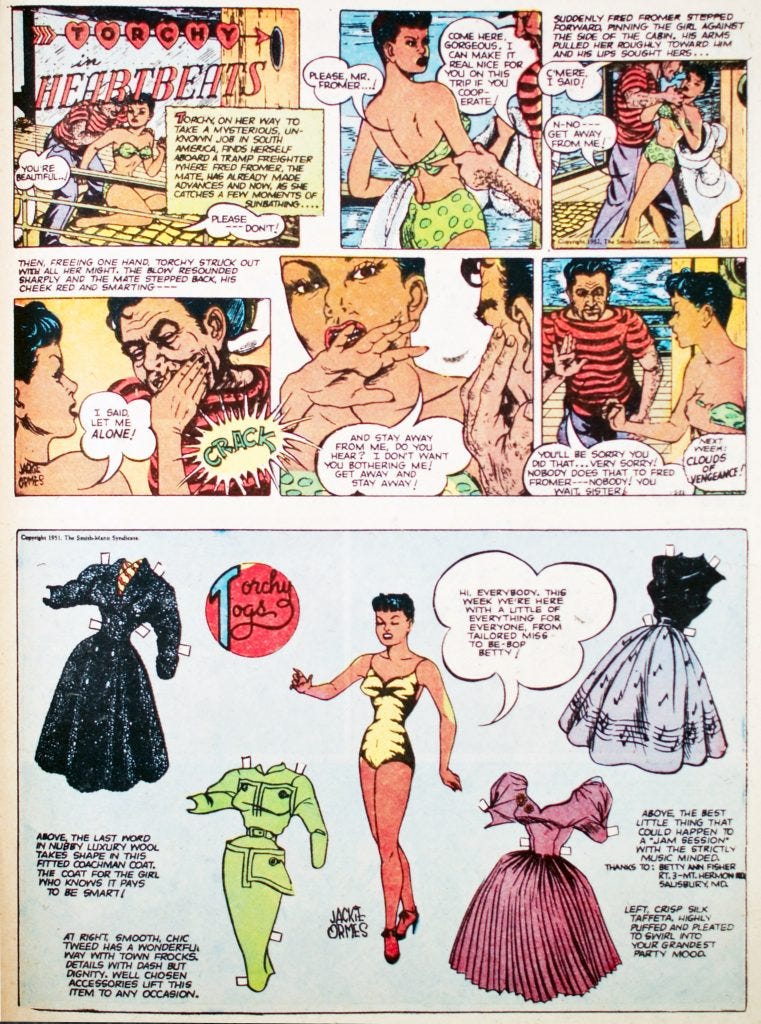
Starting August 19, 1950, the Courier began an eight-page color comics insert, where Ormes re-invented her Torchy character in a new comic strip, Torchy in Heartbeats. This Torchy was a beautiful, independent woman who finds adventure while seeking true love. Ormes expressed her talent for fashion design as well as her vision of a beautiful black female body in the accompanying paper doll topper, Torchy Togs. The strip is probably best known for its last installment on September 18, 1954, when Torchy and her doctor boyfriend confront racism and environmental pollution.
Ormes contracted with the Terri Lee doll company in 1947 to produce a play doll based on her little girl cartoon character. The Patty-Jo doll was on the shelves in time for Christmas and was the first American black doll to have an extensive upscale wardrobe. As in the cartoon, the doll represented a real child, in contrast to the majority of dolls that were mammy and Topsy-type dolls. The dolls were popular with both black and white children.
Her heroines, including the iconic Torchy in Heartbeats, are strong and independent women who are socially and politically aware, striving for their goals against all odds, defying social norms, and picking themselves up by the bootstraps to move on to the next adventure. In an interview towards the end of her life, Ormes said, “I have never liked dreamy little women who can’t hold their own.” Ormes’s creations not only defied expectations for Black women but also provided her readership with strong models for what the next powerful generation of young Black women could become.
At a time when African-American characters were often confined to demeaning stereotypes, Ormes created nuanced, dignified portrayals of Black life. Her characters were complex, intelligent, and fashionable, challenging societal norms and offering an aspirational vision for African Americans.
Ormes tackled social and political issues everywhere from race to sex to environmental pollution. In every aspect of her life, the cartoonist was involved in humanitarian causes, and her passion for left-wing ideologies after World War II even led to an investigation by the FBI.
Ormes married accountant Earl Ormes in 1931, and they eventually moved to Chicago. The pair had one child, Jacqueline, who died of a brain tumor at the age of three. Ormes and Earl remained married until his death in 1976.
She retired from cartooning in 1956, although she continued to create art, including murals, still lifes, and portraits, until rheumatoid arthritis made this impossible. She was also a founding member of the board of directors for the DuSable Museum of African American History. Ormes was a passionate doll collector, with 150 antique and modern dolls in her collection, and she was an active member of the Guys and Gals Funtastique Doll Club, a United Federation of Doll Clubs chapter in Chicago.
Jackie Ormes died of a cerebral hemorrhage in Chicago on December 26, 1985. Ormes was posthumously inducted into the National Association of Black Journalists Hall of Fame in 2014 and was inducted into the Will Eisner Comic Industry Eisner Award Hall of Fame as a Judges’ Choice in 2018.
Today In Black History
In 1775, General Nathan Greene of the Council it's 330 of General Officers decided to bar slaves and free Blacks from the Continental Army.
In 1871, the original copy of the Emancipation Proclamation was destroyed during the Great Chicago Fire, which also killed over 300 people.
In 1953, the city of Birmingham, Alabama, barred Jackie Robinson’s team, the Negro-White All Stars, from playing there, leading to Robinson dropping the white players from the team.
In 1962, the African nation of Algeria was admitted as the 109th member of the United Nations.
In 1991, the discovery of an African-American cemetery in Manhattan was announced as the largest and earliest burial ground of free and enslaved Africans in America; it later became a national monument.
In 2004, Wangari Maathai of Kenya, founder of the Green Belt Movement, became the first African woman to receive the Nobel Peace Prize for “her contribution to sustainable development, democracy, and peace.”
In 2019, Steven Reed was elected as the first Black mayor of Montgomery, Alabama.
October is my birthday month, and I will be 75 years old this month!
Help us to reach our October, 2025 goals: +150 (75X2) total new subscribers, which will include +75 new paid subscribers:
Please share and subscribe to help us grow this publication.