Issue #1,025 Today In Black History, Monday, May 4, 2026
THANK YOU to all of our wonderful subscribers!
Our goal is to make “We Are Speaking” a best-selling publication by July 1, 2026, increasing our reach and influence! To achieve our goal, we will need 15 new paid subscribers every week, or 5 new paid subscribers for each of the three days per week we publish. If you value our publication, please consider becoming a paid subscriber for just $5/month or $50/year. We appreciate your financial support! We appreciate your financial support!
All new subscribers (free and paid) will receive this valuable eBook! If you don’t have yours, download it below.
Reclaiming The Narrative Why Learning Black History Changes Everything Generic Copy
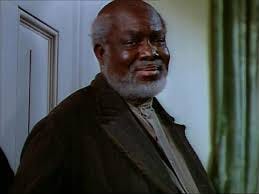
James Baskett: A Trailblazing Life in the Shadows of Hollywood
Unlike my husband and younger daughter, who practically live at the movies, I am not really a movie-goer. I only see about 2-3 movies a year in the theaters. I’ve recently seen “Michael,” “Avatar,” and of course “Sinners,” which I saw twice in the theater. Very unusual for me.
Today, the work of Black actors and directors is much more prevalent, and Black production companies are making very successful films meant for general audiences.
However, through my studies in Black history, I do know that until the late 1960s, almost all of the roles by the major studios relegated Black actors to stereotypical representations. “Lilies of the Field,” released in 1963, was one of the exceptions. It starred Sydney Poitier, who became the first Black actor to win the Academy Award for Best Actor.
In 1948, James Baskett became the first Black actor to receive an honorary award for his role in the controversial movie, “Song of the South.”
James Baskett was born on February 16, 1904, in Indianapolis, Indiana. He grew up with a passion for performance that expressed itself early. He worked steadily in Black theater and radio before making his way to Hollywood, where opportunities for African American actors were severely limited, often reduced to demeaning stereotypes or outright exclusion.
In the 1930s and early 1940s, Baskett found consistent work on radio and in small film roles, gradually building a reputation as a skilled, versatile performer. He was particularly acclaimed for his comedic timing and his warm, expressive voice — qualities that would eventually define his most famous role. He also appeared in a number of films produced specifically for Black audiences, known as “race films,” which allowed African American performers to play full, complex human beings rather than the caricatures mainstream Hollywood typically offered.
His crowning achievement came in 1946, when Walt Disney cast him as Uncle Remus in Song of the South, a live-action and animated hybrid film based loosely on the Uncle Remus stories by Joel Chandler Harris. Baskett anchored the film with a performance that transcended the material. He also provided the voice of the animated character Br’er Fox, demonstrating his remarkable range within a single production. The film’s centerpiece song, “Zip-a-Dee-Doo-Dah,” became one of the most recognizable tunes in Disney history, winning the Academy Award for Best Original Song.
The following year, at the 20th Academy Awards ceremony in 1948, James Baskett received an honorary Oscar — presented by actress Ingrid Bergman — in recognition of his “able and heart-warming characterization” of Uncle Remus. He was the first African American male actor ever to receive an Academy Award of any kind. The honor was deeply meaningful, even as it arrived with painful ironies: Baskett had been unable to attend the film’s Atlanta premiere because, as a Black man, he was not welcome in the segregated theaters where it screened. This was the same rejection that Hattie McDaniel, the first Black actor to win an Oscar, experienced in 1940 when she was denied entry to the theater at the premiere of “Gone With The Wind” in Atlanta. McDaniel received an Oscar for Best Supporting Actress.
James Baskett’s health had been deteriorating for some time. He suffered from a serious heart condition and diabetes, and the physical demands of his later career took a toll. The Oscar came just months before his death. James Baskett passed away on July 9, 1948, in Los Angeles, at just 44 years old. He died before he could fully witness the legacy he had created.
In the decades since, Song of the South has become a deeply controversial film, with entirely valid criticisms for its romanticized portrayal of the post-Civil War South and its racial stereotypes. Disney has declined to give the film a wide release since 1986. Yet, Baskett brought humanity and grace to the role while enduring the systemic inequality that would have defeated many others.
Today In Black History
In 1818, the Netherlands and Britain signed a treaty to combat the slave trade.
In 1891, Black Dr. Daniel Hale Williams founded the Provident Hospital and Training School in Chicago, the first Black-owned and operated hospital in the United States.
In 1896, Black Cowboy Bill Pickett was credited with inventing “Bull Dogging,” the skill of grabbing cattle by the horns and wrestling them to the ground.
In 1897, Black inventor J.W. Smith received a patent for a lawn sprinkler.
In 1959, Black singer Ella Fitzgerald won the Grammy for Best Jazz Performance at the first Grammy Awards.
In 1961, the CORE (Congress for Racial Equality) organization began the “Freedom Rides” from Washington, D.C., designed to test the South’s compliance with the Interstate Commerce Commission’s desegregation order.
In 1970, Black playwright Charles Gordone won the Pulitzer Prize for his 1969 play, “No Place to Be Somebody.”
Our goal is to make “We Are Speaking” a best-selling publication by July 1, 2026, increasing our reach and influence! To achieve our goal, we will need 15 new paid subscribers every week, or 5 new paid subscribers for each of the three days per week we publish. If you value our publication, please consider becoming a paid subscriber for just $5/month or $50/year. We appreciate your financial support! We appreciate your financial support!
You are also welcome to view “We Are Speaking” in Substack Notes. You can also read other Substack publications without subscribing to them when you join Notes.