

Issue #1,038 Today In Black History, Friday, June 19, 2026
Help us to reach our June 2026 goals: +1600 total subscribers and +75 paid subscribers:
Please share and subscribe to help us grow this publication.
If you like us, REALLY like us, please click the “Like” button at the end of this post!
We appreciate your support!
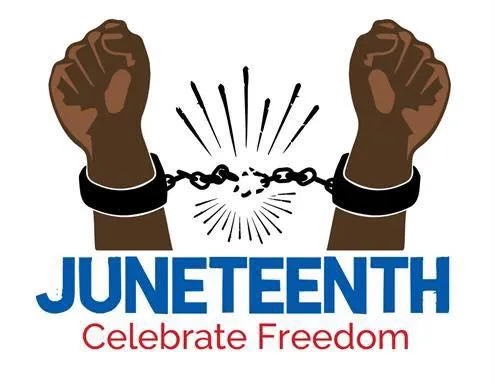
I republish this post every year on Juneteenth.
My dear friend Jamon Jordan is a highly respected educator in Detroit and the official historian for the City of Detroit. He offers walking tours of historical sites in Detroit and Michigan for groups from across the country and around the world. He is also the president of the Detroit Chapter of the Association for the Study of African American Life and History, which was founded in 1915 by my own great-granduncle, Dr. Carter C. Woodson.
Dr. Woodson also founded Negro History Week on February 7, 1926. Negro History Week is now Black History Month. The reason Black History Month is in February is that Negro History Week was celebrated in February.
As Jamon explains, Kwanzaa, Black History Month, and Juneteenth are “FUBU” (For Us By Us); none of those events was “given to us” by others.
On my previous podcast, Jamon was a guest for Kwanzaa, Black History Month, and Juneteenth every year. The depth of his knowledge and the way he presents Black American and African history in general, as well as historical figures of all races and events, for the City of Detroit are unparalleled.
If you are on Facebook and you love history, you really need to follow Jamon.
In 2019, Jamon wrote an article about the actual significance of Juneteenth for Black people. As he beautifully explains it, Juneteenth is not “just when the slaves in Texas finally got the news…” It is much more important and meaningful than that.
With Jamon’s permission, I am reprinting his entire 2019 essay on Juneteenth. I am sure you will find it as illuminating, interesting, affirming, and educational as I did.
“Juneteenth” by Jamon Jordan, Official Historian for the City of Detroit
The significance of Juneteenth rests on a principle in African culture that prioritizes “we” over “I.”
On April 16, 1862, Congress passed, and Lincoln signed the Compensated Emancipation Act for Washington DC. This law officially ended slavery in the nation’s capital.
The slaveowners were given $300 for every enslaved person they freed. The enslaved Africans were offered $100 if they left the country and went to Haiti or Liberia.
In Washington, D.C., there is an Annual Emancipation Day celebration on April 16th.
It hasn’t caught on anywhere else.
Why not?
Some states ended slavery on their own before and during the Civil War.
Vermont ended slavery in its constitution on July 8, 1777. After doing that, the state was denied admission into the United States for over a decade.
As important as that historical fact is, we don’t have a celebration for that.
Why not?
Because it freed SOME people.
Michigan, which had slavery from the French arrival in 1701 until the 1833 uprising to free Thornton & Lucie (Rutha) Blackburn, officially ended slavery on January 26th, 1837.
There is no Freedom Celebration in Detroit on January 26th.
Some people would not be enslaved. But what about Black people in other places?
President Abraham Lincoln declared that the Emancipation Proclamation would take effect on January 1, 1863, but the Proclamation only applied to the southern areas in rebellion - the Confederate states.
Immediately, any person enslaved in the South in an area that was under Union army occupation was freed.
The Proclamation led many Africans to escape their enslavers and reach Union lines to obtain their freedom, and many of them joined the Union Army.
Word got around, and within 6 months of the Emancipation Proclamation, a million Black people escaped from plantations to Union lines.
They freed themselves.
There are numerous Emancipation Day celebrations during the first week of January. But they are not on the scale of Juneteenth.
In the Black community, churches hold watch night services on December 31 - New Year’s Eve, which originated with the Emancipation Proclamation becoming law on January 1, 1863.
But Watch Night is not a celebration.
On June 1-2, 1863, Harriet Tubman led a troop of Union soldiers into South Carolina to the Combahee River. There, they freed 750 Black people from slavery.
There is no freedom celebration on June 1st or 2nd.
On January 31, 1865, Congress approved the 13th Amendment, which made slavery unconstitutional.
There is no freedom celebration on January 31st.
The reason why Juneteenth is so significant is only a LITTLE about the Black people in Texas who were informed of their freedom on June 19, 1865, by Union General Gordon Granger, when he brought a regiment into Galveston, Texas.
The reason why Juneteenth resonates with Black people is that it is NOT the honoring of SOME Black people who got free from escaping, or from lawsuits, or from buying their freedom, or from slave revolts, or from being manumitted by their slaveowners, or by state constitutions, or by the Emancipation Proclamation.
It is the celebration of freedom AT LAST for ALL OF US.
This idea from African culture is that freedom is not really about “some” of us. But it really is about “ALL” of us. (Bold is added by me…)
This is why, when Harriet Tubman escaped in 1849, she went back over and over to help others.
This is why Second Baptist Church in Detroit was a station on the Underground Railroad.
This is why Frederick Douglass was an abolitionist, a writer, an Underground Railroad agent, and an antislavery orator.
This is why Isabella Baumfree became Sojourner Truth.
When you celebrate Juneteenth, you’re not just recognizing the people who were freed in Galveston, Texas, on June 19, 1865.
You’re honoring the total fight for freedom in Elmina, Cape Coast, and Goree Island.
On the Whydah, the Susan Constant, the Clotilda, and the Amistad.
You’re honoring David Walker, Gabriel Prosser, Denmark Vesey, and Nat Turner.
Because it wasn’t just about THEM. It was about ALL OF US.
Juneteenth, unlike the Compensated Emancipation for Washington, D.C., or the Emancipation Proclamation, is not about SOME OF US.
It’s about ALL OF US.
And Black people created Juneteenth.
That’s why Juneteenth is important.
You are also welcome to view “We Are Speaking” in Substack Notes. You can also read other Substack publications without subscribing to them when you join Notes.
This post is free to read. To financially support “We Are Speaking” for no more than $5 per month, please subscribe at the paid level.
