Issue #1,002 Today In Black History, Wednesday, March 11, 2026
Our goal is to make “We Are Speaking” a best-selling publication by July 1, 2026, increasing our reach and influence! To achieve our goal, we will need 15 new paid subscribers every week. If you value our publication, please consider becoming a paid subscriber for just $5/month or $50/year. We appreciate your financial support! We appreciate your financial support!
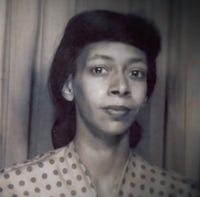
In an era before “fake news” became a household term, Marion Stokes was already fighting to protect the truth. Armed with VCRs and an unwavering commitment to historical preservation, this Philadelphia-born activist spent 35 years recording television broadcasts 24 hours a day, creating what many consider the most comprehensive personal archive of television history ever assembled.
Marion Marguerite Stokes was born on November 25, 1929, in Germantown, Philadelphia. Raised as an orphan, she developed an early passion for information and access, eventually training as a librarian. In the 1940s through early 1960s, she worked at the Free Library of Philadelphia, where her progressive political beliefs and civil rights activism eventually led to her dismissal—a casualty of Cold War-era political persecution.
But Stokes refused to be silenced. Throughout the 1960s and 1970s, she became deeply involved in social justice movements. She helped organize buses to the 1963 March on Washington, served as a founding board member of the National Organization for Women, and championed the integration of Girard College. She also co-produced Input, a Sunday morning public-access television show focused on social justice and community dialogue. These experiences taught that those in power control the narrative, and without documentation, history could be rewritten or erased entirely.
In 1975, Stokes purchased a Betamax magnetic videotape recorder. But it wasn’t until November 4, 1979—the day the Iranian Hostage Crisis began—that she truly “hit record and never stopped,” as her son Michael Metelits would later describe it. The crisis coincided with the dawn of the 24-hour news cycle, and Stokes recognized something profound: television was becoming the primary medium through which Americans understood their world, yet networks routinely discarded their archives.
What began as a single VCR evolved into an obsessive, round-the-clock operation. By 1980, when CNN launched, Stokes was running multiple machines simultaneously. She invested in Apple stock early, using her wealth to buy countless VCRs, tapes, and, eventually, nine apartments to house her growing collection. Family dinners were cut short when the tapes needed to be changed. Vacations were planned around recording schedules. Her life became entirely organized around the rhythm of preservation.
Over 35 years, Marion Stokes recorded approximately 840,000 hours of television across 71,000 VHS and Betamax tapes. She captured revolutions and wars, political speeches and sitcoms, breaking news and commercials. Her archive included coverage of the Space Shuttle Challenger disaster, presidential addresses, and countless hours of news from nine different stations.
Stokes understood media theory decades before it became a mainstream discussion. She recognized how narratives were constructed, how information was suppressed or emphasized, and how television could be weaponized to manipulate public opinion. Her project was simultaneously an act of activism and an act of love—a gift to future generations who would need to understand how their present was mediated and constructed.
Initially, no institution wanted her tapes. But in 2013, the Internet Archive recognized its historical significance and began the painstaking process of digitization. Today, her collection is freely available online, searchable, and accessible to researchers, historians, and anyone seeking to understand how television shaped American history.
In 2019, filmmaker Matt Wolf released “Recorder: The Marion Stokes Project,” a documentary that brought her remarkable story to wider audiences. Marion Stokes proved that one person’s obsession could become humanity’s treasure—a testament to the power of persistence, vision, and an unshakeable belief that truth, once preserved, can never be entirely erased.
Marion Stokes died on December 14, 2012, at age 83. Interestingly, her final recordings captured the breaking news of the Sandy Hook Elementary School shooting. Her VCRs were switched off only when she took her last breath.
Today In Black History
In 1789, Black astronomer, mathematician, and almanac author Benjamin Banneker began to lay out the street design of the District of Columbia, along with French architect Pierre Charles L’Enfant.
In 1824, the U.S. Department of War created the Bureau of Indian Affairs.
In 1874, Frederick A. Douglass was elected president of Freedmen’s Bank and Trust.
In 1959, “A Raisin in the Sun,” by Lorraine Hansberry, opened at the Barrymore Theater in New York City and became the first play written by a Black woman performed on Broadway.
In 1963, the African nation of Somalia dropped diplomatic relations with Great Britain.
You are also welcome to view “We Are Speaking” in Substack Notes. You can also read other Substack publications without subscribing to them when you join Notes.