Issue #1,007 Today In Black History, Monday, March 23, 2026
Our goal is to make “We Are Speaking” a best-selling publication by July 1, 2026, increasing our reach and influence! To achieve our goal, we will need 15 new paid subscribers every week. If you value our publication, please consider becoming a paid subscriber for just $5/month or $50/year. We appreciate your financial support! We appreciate your financial support!
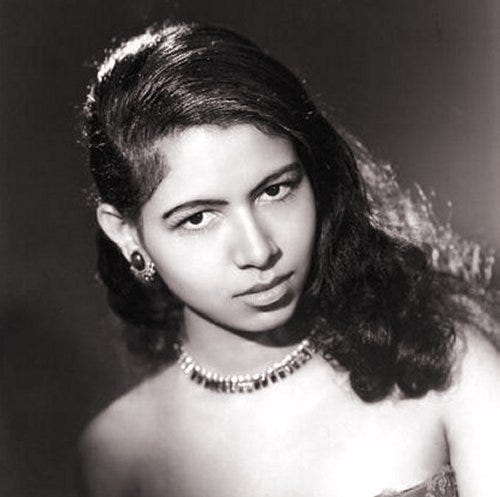
Philippa Schuyler was born on August 2, 1931, to an extraordinary and unconventional family. Her father, George Schuyler, was a renowned and influential Black journalist and social commentator. Her mother, Josephine Cogdell, was a blond, blue-eyed Texan heiress who broke racial barriers through her marriage to George. Josephine was an intellectual trailblazer who believed strongly in the potential of interracial unions and was convinced that cultural and genetic diversity could strengthen society.
Her mother subscribed to unconventional nutritional practices, believing that raw foods—including uncooked meat—preserved vital vitamins and nutrients. While these parenting methods were certainly unusual by mid-20th century standards, the Schuyler household was a place where ideas were debated, music filled the air, and excellence was expected.
Philippa’s upbringing followed the recommendation of the behavioral psychologist John B. Watson that a child should never be hugged or kissed, and her mother’s journals contain numerous references to beating, whipping, and slapping. The approach may have been unconventional, but the results were spectacular. When Philippa was not yet three, she had a 500-word reading and writing vocabulary, and when she was 5, her IQ was measured at 180. She displayed musical talent at a very early age and made her first public broadcast appearance as a pianist at the age of four. Shortly before her fifth birthday, she entered her first musical competition and, in addition to playing four set pieces, performed six of her own compositions, winning a gold seal certificate.
By her teenage years, she had earned recognition from some of the most respected figures in American music. Legendary conductor Leonard Bernstein and renowned composer Virgil Thomson both recognized her exceptional abilities. She performed with five leading American orchestras while still in her teens and made her debut with the New York Philharmonic at 16 years old.
Her compositions and performances were favorably compared to those of American masters such as Aaron Copland and Marc Blitzstein. As a pianist, she demonstrated technical mastery and emotional depth that captivated audiences. Her future in music seemed limitless, and the classical music establishment appeared ready to embrace her as a major talent.
Yet despite her remarkable achievements, Philippa’s life was marked by profound contradictions and challenges. As the daughter of a Black man and a white woman at a time when interracial marriage was illegal in many American states, she navigated a deeply segregated society. She was often treated as an outsider in different circles—never fully accepted by either Black or white audiences due to her mixed heritage. This position on the margins of society, while providing a unique perspective, also subjected her to discrimination and prejudice.
In the mid-1940s, it became clear that Philippa’s color was an insurmountable barrier to her career as a soloist in America, so she switched her focus to composing. Her Manhattan Nocturne was performed and broadcast in April 1945 at a New York Philharmonic Young People’s Concert, and this marked the emergence of Philippa Schuyler, the composer. Twelve months later, she made her debut in the dual role of pianist and composer with the New York Philharmonic at Lewisholm Stadium.
As a woman in a male-dominated classical music world, Philippa faced gender-based expectations and limitations. She was talented and ambitious, but the institutions of her era were not structured to support women composers and conductors. This profoundly shaped her worldview.
Despite a limited number of high-profile concerts for white audiences, Philippa’s appeal remained largely confined to the African American community. In a Look Magazine profile, she was described as “The Shirley Temple of American negroes” and her appearance with Arthur Fiedler in Boston was in the ghetto of the “Colored American night at the Pops”. Philippa later wrote that it was in the late 1940s that she became intellectually aware of America’s racial prejudice. Her insecurity was further fueled by the increasing realization that her mother viewed her simply as a genetic and behavioral experiment whose success was due to nutrition and training rather than natural talent.
Her European debut was made with the BBC Symphony Orchestra in 1953, and during her visit to England, she formed a lasting friendship with the Black Guyanese conductor Rudolph Dunbar, while the African American Everett Lee conducted several of the orchestras that accompanied her on her tours.
As Philippa matured, she became increasingly conscious of the systemic injustices she experienced and witnessed. Rather than remain in the classical music establishment that had lauded her talents, she made the bold decision to pursue journalism—a field that allowed her to address social and political issues directly.
Her Black father had made the extraordinary political journey from moderate left to the extreme right. In his later years, George Schuyler was described by a Harlem friend as politically to the right of Barry Goldwater, and he finally fell from grace after writing a front-page article for an ultra-conservative newspaper condemning the award of the Nobel Peace Prize to Martin Luther King.
In 1959, Philippa started to experiment with her ambiguous ethnicity by describing herself as ‘white’ on visa applications. This allowed her to travel to South Africa, which was then in the grip of apartheid, and during her brief visit, she was championed by white residents.
Philippa discovered the vocation of political journalism when she found herself in the Congo in 1960, as the country lurched towards independence. As well as a journalist, she was a prolific author whose output included a semi-apocryphal autobiography, two novels, non-fiction books on the Congo and Vietnam, and a feminist tract. Her new career as a journalist was confirmed when she returned to the Congo to report with a United Press International accreditation.
She became an accomplished journalist and writer, using her voice to report on important issues and give a voice to the voiceless. Her transition from concert pianist to investigative journalist reflected her deepening commitment to social justice and her refusal to be confined by expectations or tradition. She brought the same intellectual rigor and passion to her journalism as to her music.
On May 9, 1967, she was traveling on a US military helicopter to Da Nang, en route to America for a recital at New York’s Town Hall. When it was ten miles from its destination, the Lycoming UH-1D crashed into Da Nang Bay, and Philippa and two others were killed. Two years later, her mother, Josephine Schuyler, hung herself.
Philippa Schuyler refused to be defined by a single role or achievement and instead pursued truth and justice wherever her conscience led her.
Much of the information in this article came from an article, “On an Overgrown Path.”
Today In Black History
In 1956, the African nation of Sudan declared its independence from a joint British/Egyptian ruling coalition. South Sudan became an independent country on July 9, 2011.
In 1971, Rev. Walter Fauntroy became the first nonvoting congressional delegate from the District of Columbia since Reconstruction.
In 2010, President Barack Obama signed the ACA (Affordable Care Act) into law.
Our goal is to make “We Are Speaking” a best-selling publication by July 1, 2026, increasing our reach and influence! To achieve our goal, we will need 15 new paid subscribers every week. If you value our publication, please consider becoming a paid subscriber for just $5/month or $50/year. We appreciate your financial support! We appreciate your financial support!
You are also welcome to view “We Are Speaking” in Substack Notes. You can also read other Substack publications without subscribing to them when you join Notes.