

Issue #1075: Today In Black History, Monday, September 21, 2026
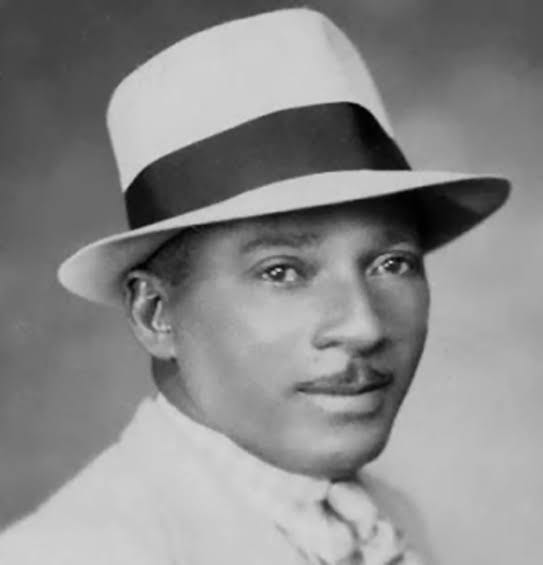
Few artists have set an entire people’s longing to music the way Rafael Hernández Marín did. The Afro-Puerto Rican songwriter, born in Aguadilla in 1892, wrote roughly 3,000 compositions over a life that carried him from a cigar-rolling childhood to the battlefields of France, the stages of Havana and Mexico City, and the crowded streets of Spanish Harlem. Two of his songs, “Lamento Borincano” and “Preciosa,” are still sung as unofficial anthems of Puerto Rico.
Humble Beginnings in Aguadilla
Hernández was born on October 24, 1892, in the Tamarindo sector of Aguadilla, into a family of Afro-Puerto Rican tobacco workers. Raised in poverty, he learned cigar-making as a child, but his grandmother recognized his gift and helped pay for formal music lessons in San Juan beginning at age twelve. He mastered the guitar, violin, piano, and several brass instruments, and by fourteen he was performing professionally with local orchestras.
A Hellfighter in France
In 1917, the celebrated African American bandleader James Reese Europe went looking for horn players who could read music and found them in Puerto Rico. Hernández and his brother Jesús were among about eighteen Puerto Rican musicians recruited to the 369th Infantry Regiment, a segregated unit known as the Harlem Hellfighters. The regiment earned France’s Croix de Guerre for gallantry and is credited with helping introduce jazz to Europe. Hernández mustered out as a sergeant and returned to civilian life in 1919, ready to build a career in music.
Songs of Longing
After the war, Hernández directed the orchestra at Havana’s Fausto Theater, then settled in New York City. In 1925, he formed the Trío Borincano, and his sister Victoria opened Casa Hernández, a music store that also served as a booking agency, on September 2, 1927. His groups toured across the United States and Latin America.
It was in Spanish Harlem, in 1929, that he wrote “Lamento Borincano,” the story of a jíbaro, a poor farmer, who travels to town hoping to sell his crops and finds no buyers. He returns home with nothing, a portrait of Puerto Rico’s hardship as the Great Depression closed in. The song, first recorded by Canario y Su Grupo, became an instant hit across Latin America. In 2018, the Library of Congress added the 1930 recording to the National Recording Registry.
In 1932, Hernández moved to Mexico, where he studied at the National Conservatory and composed for the country’s golden age of cinema. There, in 1937, he wrote “Preciosa,” a love letter to the island that celebrates Puerto Rican identity’s Spanish, African, and Taíno roots. Listeners of every political persuasion embrace it. His catalog also includes “El Cumbanchero,” “Capullito de Alhelí,” “Silencio,” and “Campanitas de Cristal.”
Honors and Legacy
Hernández returned to Puerto Rico in 1947, led the orchestra of the government radio station WIPR, and served as honorary president of the Authors and Composers Association. He died in San Juan on December 11, 1965, at age 73, and is buried in Old San Juan’s Santa María Magdalena de Pazzis Cemetery.
Recognition has followed him ever since. Rafael Hernández Airport in Aguadilla bears his name, as do schools in New York, Boston, and Newark, the Hernandez Houses in New York City, and a museum at Interamerican University of Puerto Rico. He was inducted into the International Latin Music Hall of Fame in 1999 and the Latin Songwriters Hall of Fame in 2014.
Sources:
The Greatest Jibarito: Afro-Boricua Rafael Hernández – Centro de Estudios Puertorriqueños
Rafael Hernández – EBSCO Research Starters
As a small Substack publication, we could really use your support!
Please enter your email below to support us by subscribing at the free or paid level for less than $10/month.
Independent authors and creative professionals! Please scroll to the “Shameless Plug” at the end to find out about the Pam Speaks 2 You Creative Business Community app for creative branding and marketing.
Today In Black History
In 1872, John Henry Conyers became the first Black person to enter the U.S. Naval Academy at Annapolis, MD.
In 1891, Black inventor F.W. Leslie patented the envelope seal.
In 1959, Juanita Kidd was appointed Philadelphia Municipal Court Judge and later elected to a full term, becoming the first Black woman elected judge in the United States.
In 1989, General Colin Powell was named Chairman of the Joint Chiefs of Staff.
Paid subscribers can always leave questions in the comments or email us.
Please consider becoming a paid subscriber for $10/month or less to access all of the articles and other benefits.



If you are an independent author or creative professional, this is your chance to join the Pam Speaks 2 You Creative Business Community, and there’s an app for that!
The Pam Speaks 2 You Apple/iOS app is live!
The Pam Speaks 2 You Google/Android app is live!
You can also access the Pam Speaks 2 You app on the web!