Issue #994 Today In Black History, Wednesday, February 18, 2026
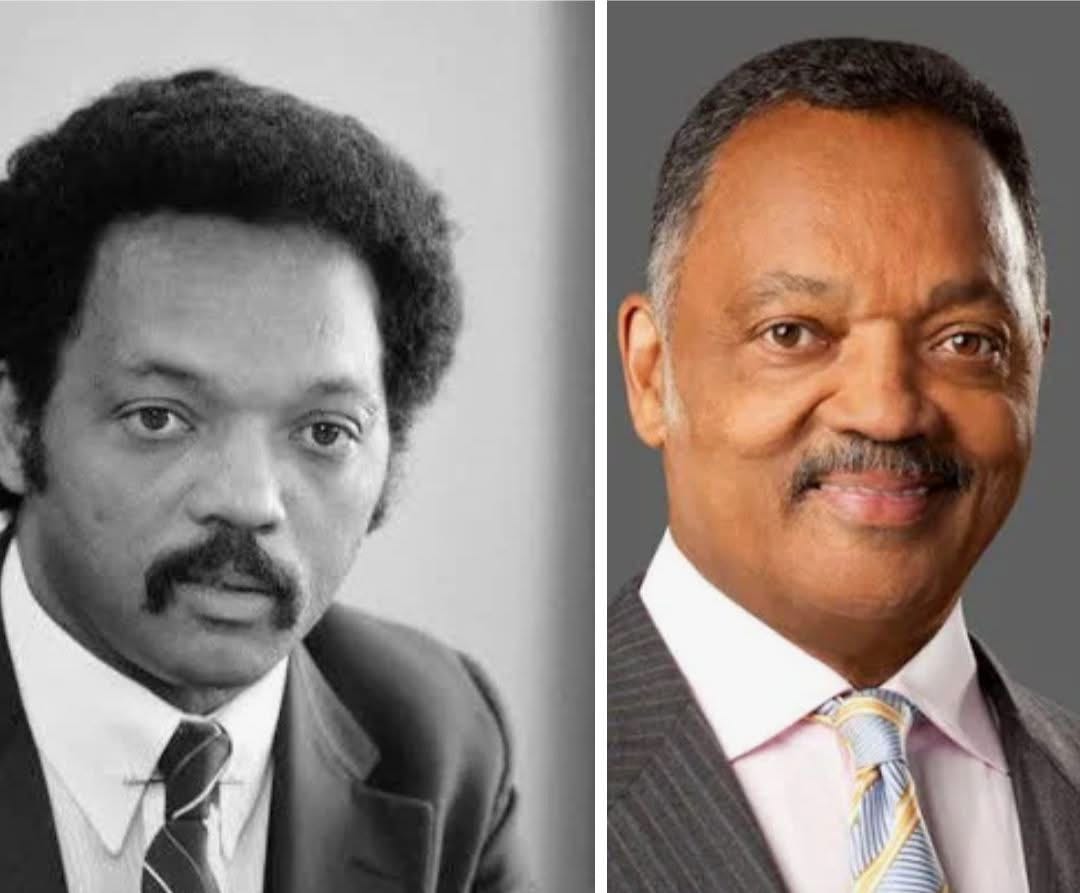
I AM somebody! Rev. Jesse Jackson, Sr.
I came of age during the 1960s, a decade with four assassinations of our leaders, domestic racial strife, disputes about the war in Vietnam, and international near-disasters such as the Cuban Missile Crisis.
I also went outside on July 20, 1969, to see if I could see the Apollo 11 astronauts land on the moon! All I saw was the moon—I couldn’t see the astronauts!
“Sesame Street” also premiered in 1969, and Rev. Jackson was one of its first guests.
As I have said before, my family always encouraged my political engagement and knowledge of Black History, starting with my grandmother taking 5-year-old me with her to register people in her neighborhood to vote, continuing with my father taking 12-year-old me to see and hear Dr. King at the 1963 Detroit March for Freedom, to 17-year-old me (and my boyfriend) jumping on a Greyhound bus at the Student Union to go to Indianapolis to campaign for Bobby Kennedy three days before his assassination, to adult me participating behind the scenes during local, state, and national elections and teaching ALL of my Black, white, and Asian students about Black History.
So, of course, I remember learning about Jesse Jackson when he first appeared on the national stage, fighting for civil rights in the early 1960s, and I have followed him and his accomplishments ever since.
Reverend Jesse Louis Jackson, born on October 8, 1941, in Greenville, South Carolina, was one of the most influential civil rights leaders and activists of our time, with a career spanning more than six decades of work for social justice, economic equality, and human dignity. From his early days working alongside Dr. Martin Luther King Jr. to mentoring President Barack Obama, Jackson’s life tells the story of how the civil rights movement of the 1960s evolved into modern American politics.

Rev. Jackson entered the civil rights movement in the 1960s, joining the Southern Christian Leadership Conference (SCLC) under Dr. Martin Luther King Jr.’s guidance. As a young minister, Rev. Jackson was right there in the thick of it—participating in some of the most important moments of the civil rights movement, including the Poor People’s Campaign and voting rights marches.
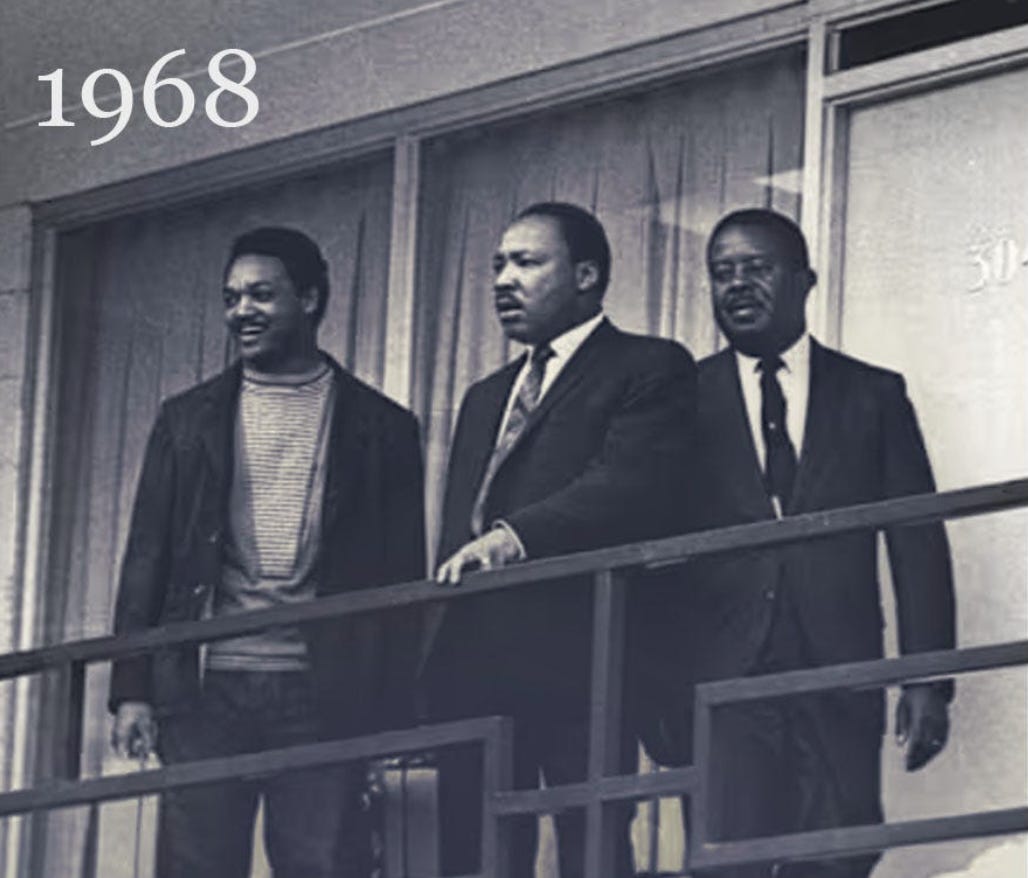
Rev. Jackson, along with Rev. Ralph Abernathy, was at the Lorraine Motel in Memphis on April 4, 1968, when Dr. King was assassinated, an experience that forever shaped his commitment to carrying on King’s work. During this era, Rev. Jackson also made a name for himself through his powerful speeches, his ability to organize people, and his dedication to nonviolent protest and economic justice for African Americans and other marginalized communities.

In 1971, Rev. Jackson founded Operation PUSH (People United to Serve Humanity) in Chicago, an organization focused on economic empowerment and social justice. PUSH took on big corporations, organized boycotts, and fought to make sure African American communities got fair treatment in business and jobs.
But Rev. Jackson’s vision kept growing. In 1984, he created the Rainbow Coalition to bring together people from all racial and ethnic backgrounds around shared goals of equality and opportunity. When Rainbow merged with PUSH, it became the Rainbow PUSH Coalition—an organization that has been pushing for progressive policies, voter registration, and economic justice ever since.
Rev. Jackson’s influence wasn’t limited to the United States. He made headlines internationally for his diplomatic work in the Middle East. In 1983, he traveled to Syria and pulled off a major diplomatic win by negotiating the release of Lieutenant Robert Goodman Jr., a U.S. Navy pilot whose plane had been shot down.
In 1990, Jackson assisted in securing the release of Americans being held in Kuwait during the Gulf crisis, with freed hostages crediting his intervention. These dramatic rescues showed that Jackson could handle high-stakes negotiations and wasn’t afraid to try unconventional approaches to achieve peace. His international work demonstrated that his leadership mattered on the global stage and earned him respect as an advocate for human rights and peaceful conflict resolution.


Jackson’s runs for president in 1984 and 1988 were game-changers in American politics. His 1984 campaign didn’t win the nomination, but it energized African American voters and showed that a candidate could build a diverse coalition around progressive ideas. His 1988 campaign came even closer—he won multiple primaries and caucuses and nearly secured the Democratic nomination. While he didn’t become president, these campaigns changed American politics forever. They proved that African American candidates could run serious, competitive national campaigns and pushed the Democratic Party not to ignore Black voting power and to focus more on economic justice and civil rights.
Rev. Jackson’s greatest legacy might be his connection of the civil rights era to modern America. Having worked directly with Dr. King, Rev. Jackson carried that movement’s moral authority and vision into the 21st century. When Barack Obama became the first African American president in 2008, Rev. Jackson’s presence at that historic moment symbolized the realization of Rev. Dr. King’s dreams and Rev. Jackson’s fight to make them real.
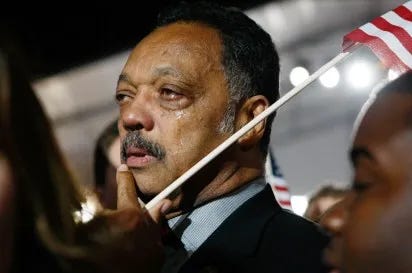
Reverend Jesse Louis Jackson’s life is a testament to the ongoing fight for justice, equality, and human dignity. His work across multiple decades—from civil rights activism to international diplomacy to electoral politics—has left a lasting impact on American society and continues to inspire new generations of activists and leaders working toward a more just and equitable world.
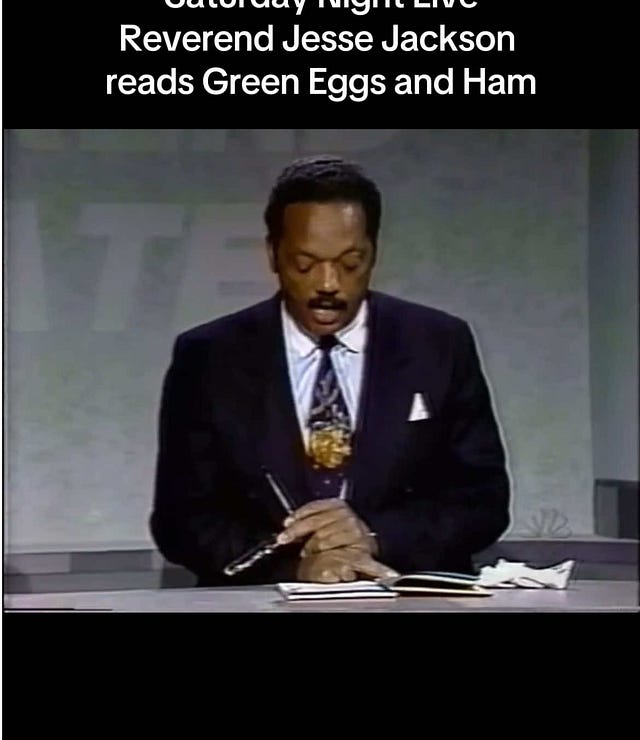
 Tiktok failed to load.
Enable 3rd party cookies or use another browser
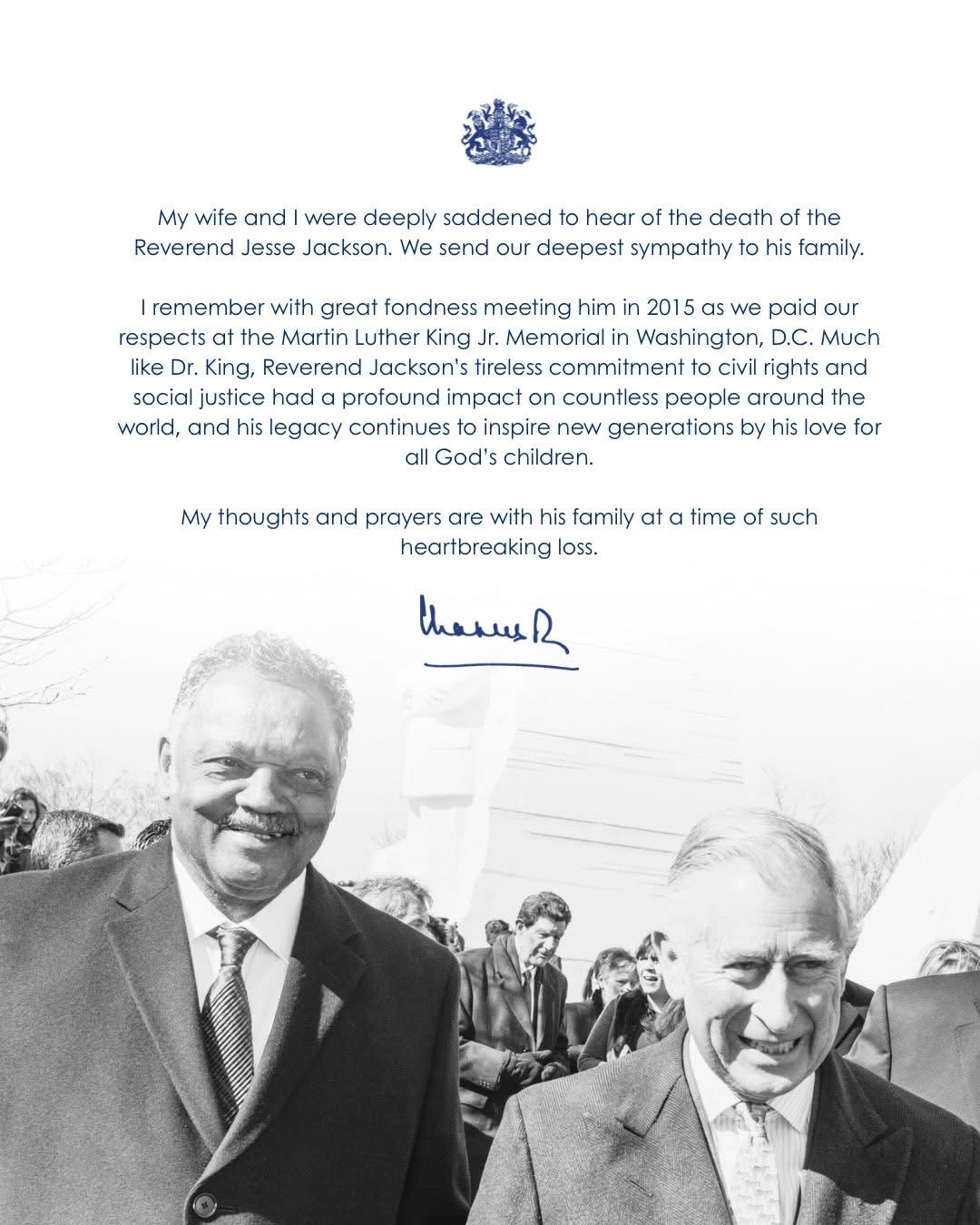
Rev. Jesse Louis Jackson, Sr., died in Chicago, Illinois, on February 17, 2026, at age 84. Tributes and memories have poured in from all over the world, including from King Charles III of Great Britain. New York Mayor Zohran Mamdani, whose father traveled to southern states to march for civil rights for Black Americans, ordered the flags on the City’s properties lowered to half-mast.
Today In Black History
In 1688, the first formal protest against slavery was made by Germantown (PA) Quakers at a monthly meeting. The attendees denounced slavery and the slave trade.
In 1867, the predecessor to what would become Morehouse College was founded in Atlanta, Georgia.
In 1861, Confederate President Jefferson Davis was inaugurated in Montgomery, Alabama.
In 1896, Black inventor H. Grenon patented a razor stropping device.
In 1957, Kenyan freedom fighter Dedan Kimathis was hanged by the British colonial government.
In 1965, church deacon Jimmie Lee Jackson was beaten and shot defending his mother’s life during a peaceful march in Marion, Alabama. He died 8 days later; his death inspired the Selma to Montgomery March.
In 1965, the African nation of Gambia, the last British colony in Africa, gained independence from Great Britain.
You are also welcome to view “We Are Speaking” in Substack Notes. You can also read other Substack publications without subscribing to them when you join Notes.