

Issue #1054 Today In Black History Monday, July 27, 2026
Please scroll to the end of this post to support us by subscribing at the free or paid level.
Independent authors and creative professionals! Please scroll to the “Shameless Plug” at the end to find out about the Pam Speaks 2 You Creative Business Community app for creative branding and marketing.
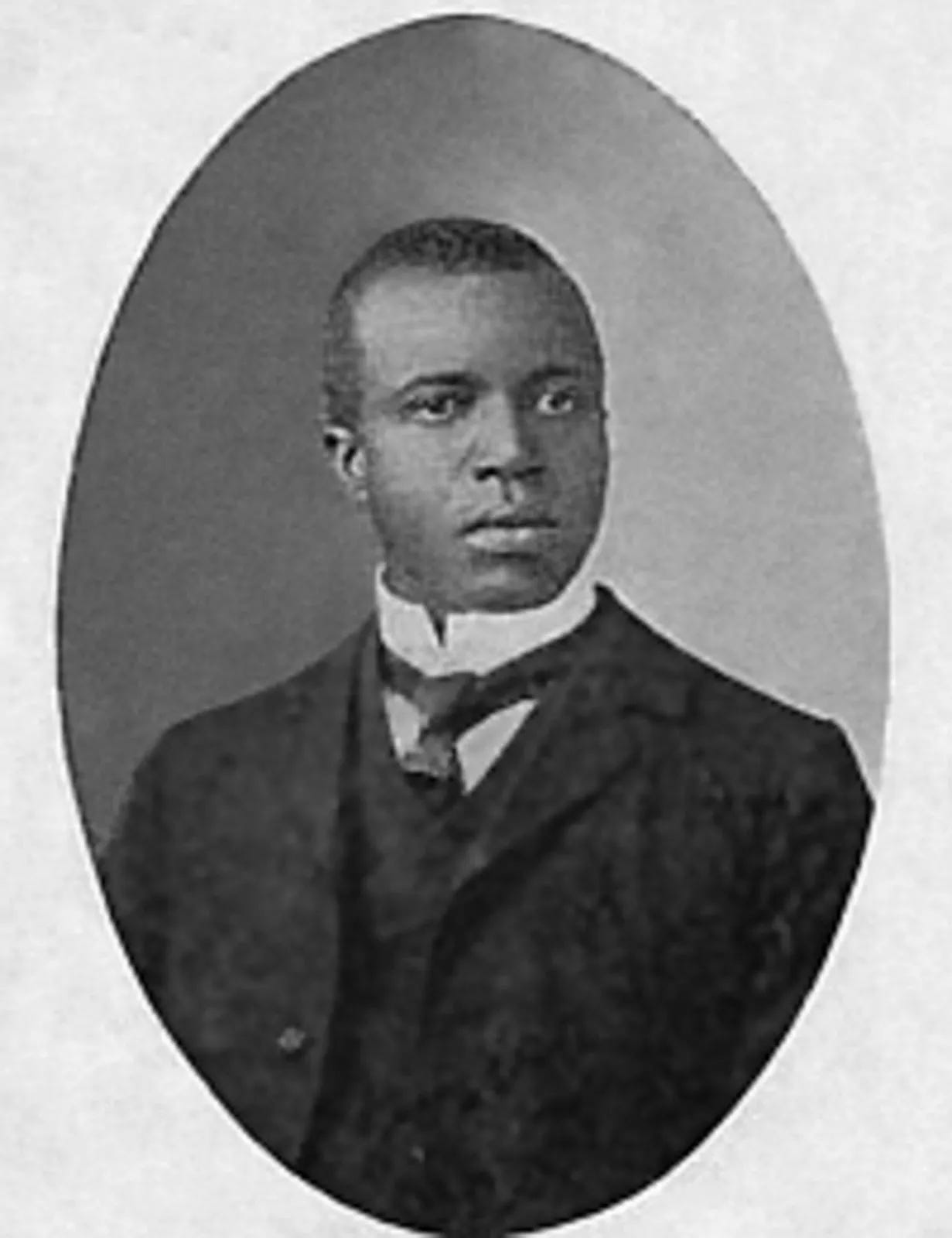
Before there was jazz, blues on Broadway, or hip-hop sampling a century of Black sound, there was ragtime — and there was Scott Joplin, the composer who turned it into art. Born around 1868 near Linden, Texas, to Jiles Joplin, a formerly enslaved laborer, and Florence Givins Joplin, a free-born domestic worker, Scott grew up in a household that valued music the way other families valued land. His father played the fiddle, his mother sang and played banjo, and by age seven Scott was already picking out tunes himself.
A Musical Education Against the Odds
The Joplin family settled in Texarkana, where Scott’s talent caught the attention of Julius Weiss, a German-born music teacher who gave the boy free lessons in harmony, sight-reading, and European classical composition. That grounding mattered: it meant Joplin approached the syncopated rhythms he heard in Black communities — echoes of field hollers, spirituals, and banjo dance tunes — with the structural discipline of a trained composer. Few musicians of his era combined those two worlds so fluently.
As a teenager, Joplin left home to work as an itinerant pianist, playing in saloons and dance halls across the Midwest and South. He eventually settled in Sedalia, Missouri, studying music formally at George R. Smith College and immersing himself in the city’s thriving Black entertainment scene.
Maple Leaf Rag and Ragtime’s Breakthrough
In 1899, Joplin published “Maple Leaf Rag” through Sedalia publisher John Stark. It became the first instrumental sheet-music hit to sell over a million copies, and — unusually for a Black composer at the time — Joplin negotiated a one-cent royalty on every copy sold, giving him a steady income for years. The piece’s rolling left-hand bass and syncopated melody became the blueprint for ragtime itself, and Joplin followed it with dozens more rags, including “The Entertainer,” “Solace,” and “Elite Syncopations.”
Reaching for Something Bigger
Commercial success wasn’t Joplin’s only ambition. He believed ragtime deserved to stand alongside European classical forms, and he poured that conviction into “Treemonisha,” an opera about a young Black woman who leads her rural community out of superstition through education. Joplin self-financed a modest 1915 staging that failed to find an audience, and he died two years later, in 1917, in New York, in poverty and declining health, without seeing his masterwork properly recognized.
The Long Echo of His Music
That recognition came decades later. Ragtime experienced a major revival in the 1970s, driven in large part by pianist and musicologist Joshua Rifkin’s recordings and by the 1973 film “The Sting,” which built its Oscar-winning score around Joplin’s “The Entertainer” — introducing his music to a new generation who had no idea it was already 70 years old. In 1976, the Pulitzer Prize board awarded Joplin a special posthumous citation for “Treemonisha,” finally honoring him as a serious American composer.
Joplin’s fingerprints are all over the music that followed him. Ragtime’s syncopation fed directly into early jazz and stride piano, and its blend of classical structure with Black vernacular rhythm set a precedent for later fusions — from Duke Ellington’s orchestral suites to the sampling culture of hip-hop, which regularly loops ragtime-era piano runs. His insistence that Black musical forms belonged in concert halls, not just dance halls, still shapes how American music institutions think about genre and legitimacy today.
More than a century after his death, Scott Joplin’s rags are still taught to every piano student who tackles syncopation for the first time — proof that the rhythms he refused to let anyone dismiss became the heartbeat of American music.
Sources: Britannica; Texas State Historical Association; SHSMO Historic Missourians; Library of Congress, Treemonisha
Today In Black History
In 1847, the African country of Liberia, with the capital named Monrovia after American President Monroe, was established by the first group of freed Blacks who left America in 1820.
In 1880, Black inventor A.P. Abourne was awarded a patent for the refining of coconut oil.
In 2004, Illinois State Senator Barack Obama gave the Keynote Address at the Democratic National Convention.
Paid subscribers can always leave questions in the comments or email us.
Please consider becoming a paid subscriber for $10/month or less to access all of the articles and other benefits.


If you are an independent author or creative professional, this is your chance to join the Pam Speaks 2 You Creative Business Community, and there’s an app for that!
The Pam Speaks 2 You Apple/iOS app is live!
The Pam Speaks 2 You Google/Android app is live!
You can also access the Pam Speaks 2 You app on the web!