Issue #1,013 Today In Black History, Monday, April 6, 2026
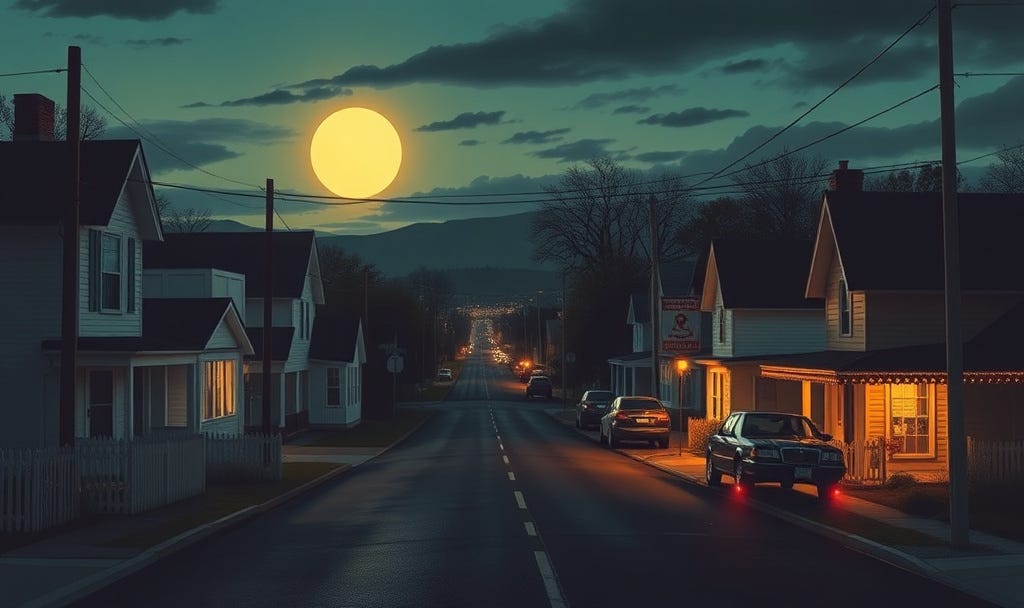
AI-generated graphic illustrating all-white sundown towns with no Black residents after dark.
Our goal is to make “We Are Speaking” a best-selling publication by July 1, 2026, increasing our reach and influence! To achieve our goal, we will need 15 new paid subscribers every week, or 5 new paid subscribers for each of the three days per week we publish. If you value our publication, please consider becoming a paid subscriber for just $5/month or $50/year. We appreciate your financial support! We appreciate your financial support!
I am a child of the 1950s and 1960s, so I certainly remember overt racism, Jim Crow, and the Civil Rights movement.
As a matter of fact, the only reason I was born and raised in Detroit is that my late father, an infectious diseases specialist like Dr. Fauci, could not get hired in St. Louis, where my parents met and planned to live after they got married.
One of my father’s childhood friends from Arkansas, where they were born and raised, was already living in Detroit and told my father that Detroit was hiring “colored people.” So my Dad applied to the Detroit Health Department, was hired, and worked there at Herman Kiefer Hospital his whole medical career.
Many of the members of both my parents’ families moved North during the “Great Migration,” but many others stayed in the South. Traveling from South to North or North to South for vacations or visiting family was rife with covert and overt dangers for “colored people” in those days. We weren’t allowed to stay in most hotels or patronize restaurants.
We cooked food ahead of time and ate at isolated picnic tables along the way. I remember my mother filling a Thermos with hot coffee for my father to drink while he was driving.
In the late 1950s, my father learned about a Black man who had purchased a group of eight cabins on a lake outside Mackinaw City in northern the lower peninsula of Michigan. For about seven or eight years, members of our family would travel from all over the country, including Los Angeles, to stay in the cabins we rented for one or two weeks. My uncle, who was a doctor in Tyler, Texas, packed his family into their Cadillac (did I mention that he was a doctor?) and drove straight through to “Mackinaw,” as we fondly called it.
At a time when Black people weren’t allowed in swimming pools or at beaches in the United States, our family swam, fished, played cards and other board games, and listened to the radio (there were no TVs at the cabins). We didn’t have to worry about racism or violence during those weeks, although we certainly knew what was going on.
Our family members had to travel to Mackinaw to get away from it all, the way they did, because across America, in addition to avoiding hotels and restaurants, there was a troubling chapter of history that many people know little about: sundown towns. These were communities that basically said “no Black people allowed”—some spelled it out in the law, others enforced it through intimidation and violence. The name comes from an unspoken but deadly serious rule: African Americans had to leave town before the sun went down, or face serious consequences. It’s a key part of understanding why our neighborhoods look so divided today.
These towns really took off in the late 1800s and early 1900s, right when millions of Black Americans were heading north looking for better lives and escape from Jim Crow laws down South. White communities saw this as a threat and decided to stop it. Some towns passed laws banning Black residents outright. Others used intimidation and violence instead. That warning—”don’t let the sun set on you in this town”—wasn’t just words; it was a deadly threat that everybody understood.
You’d find sundown towns all over the Midwest—Ohio, Indiana, Illinois, Michigan (the Detroit suburb of Livonia in Wayne County is a famous example), and many other places nationwide. Historian James Loewen documented hundreds of them in his book Sundown Towns: A Hidden Dimension of American Racism. His research showed these weren’t random acts; they were systematic features built into American geography through real estate rules, property deed restrictions, and police enforcement.
These towns used many different tricks to keep themselves all-white. Some put it in writing—property deeds had clauses saying you couldn’t sell to Black families. Towns would put sundown ordinances on the books, even if they rarely needed to enforce them officially; the threat alone did the job. The real enforcement came from the threat of violence and police looking the other way when mobs attacked. Black families trying to move in faced burned homes, violence, and intimidation.
Here’s something that might surprise you: sundown towns were mostly a Northern and Midwest problem, not just a Southern one. Illinois, Ohio, and Indiana had some of the most deliberately segregated towns in America. Nobody talks about it as much because it wasn’t written into law the way Jim Crow was in the South—but it was just as real and just as damaging. These towns blocked Black families from buying homes in neighborhoods where property values were going up, cutting them off from one of the biggest ways ordinary people build wealth.
The old sundown laws are technically off the books now, and you can’t enforce those property deed restrictions anymore. But here’s the thing—the legacy is still very much alive. A lot of these old sundown towns are still almost completely white today. Property values are higher, schools are better funded, and neighboring Black communities stayed poor. Real estate agents still steer people of color away from certain neighborhoods. Banks still discriminate in mortgages. The barriers are just less obvious now, but they’re still working.
Modern exclusion works differently than it did a hundred years ago—you don’t see the violence anymore. Instead, it’s more subtle: really expensive houses, strict zoning laws, barely any affordable housing. These mechanisms still keep people of color out. Some communities look exactly like they did during the sundown town era, which raises the question: Did anything actually change, or did discrimination just get quieter?
Sundown towns are a hidden but crucial part of American racism. They show us that segregation wasn’t accidental or inevitable—it was deliberately built and deliberately maintained through laws, violence, and social pressure. Even though the era of explicit sundown towns is over, the damage lives on in neighborhoods, property values, school quality, and wealth gaps that persist today. Understanding this history is key to fixing the residential segregation we see now and all its ripple effects on Black families’ wealth, health, education, and opportunities.
Today In Black History
In 1909, Black arctic explorer Matthew A. Henson, an ancestor of award-winning actress Taraji P. Henson, became the first non-Inuit person (ahead of Robert Peary) to reach the North Pole.
In 1931, the trial began for the nine “Scottsboro Boys” who were falsely accused of raping two white women.
In 1941, Italian forces holding the Ethiopian capital, Addis Ababa, surrendered to the Ethiopian army.
In 1968, Oakland, CA, police killed Black Panther Bobby Hutton, but another Black Panther member, Eldridge Cleaver, was charged with attempted murder for his participation in the shootout.
In 1987, LA Dodgers General Manager Al Campanis appeared on ABC News’ “Nightline” and said he believed Blacks were “not equipped” for baseball management.
Our goal is to make “We Are Speaking” a best-selling publication by July 1, 2026, increasing our reach and influence! To achieve our goal, we will need 15 new paid subscribers every week, or 5 new paid subscribers for each of the three days per week we publish. If you value our publication, please consider becoming a paid subscriber for just $5/month or $50/year. We appreciate your financial support! We appreciate your financial support!
You are also welcome to view “We Are Speaking” in Substack Notes. You can also read other Substack publications without subscribing to them when you join Notes.