

Issue #986 Today In Black History, Monday, February 2, 2026
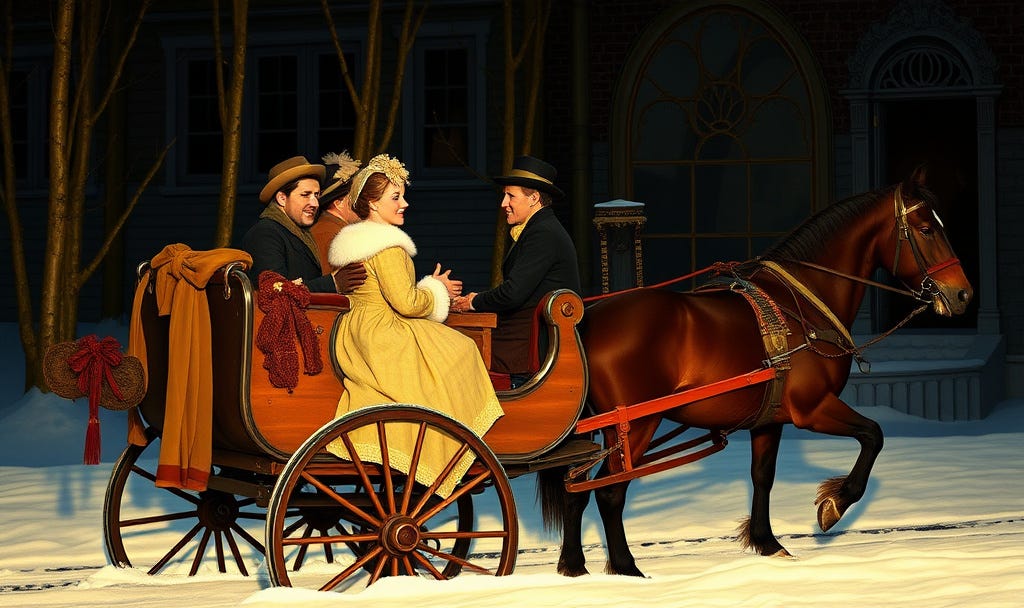
Few holiday songs are as instantly recognizable as “Jingle Bells.” Written by James Lord Pierpont and published under the title “The One Horse Open Sleigh” in 1857, the song was later renamed “Jingle Bells” and gradually became associated with Christmas festivities, despite containing no explicit references to the holiday.
James Lord Pierpont was an American composer, songwriter, arranger, and organist best known for writing “Jingle Bells.” Born into a prominent abolitionist family, he was the son of Reverend John Pierpont, a Unitarian pastor. During the American Civil War, Pierpont served as a soldier for the Confederate States. His Southern sympathies were evident in his musical compositions, as he wrote songs that contained Confederate themes. Pierpont worked as a church organist in Savannah, Georgia, during the Civil War, where he composed music that reflected the Southern perspective on the conflict.
While many people associate this tune with innocent winter fun, recent academic research has uncovered a more complex history that connects the song to problematic aspects of 19th-century American entertainment. Professor Kyna Hamill, a theater historian, has conducted extensive research into the origins of “Jingle Bells,” revealing connections to the minstrel show tradition that dominated American entertainment in the mid-1800s.
According to Hamill’s research, particularly her paper “The Story I Must Tell: ‘Jingle Bells’ in the Minstrel Repertoire,” the song was first performed in a blackface minstrel show in Boston. This performance context significantly changes how we might understand the song’s original cultural positioning. Minstrel shows emerged in the early 19th century and remained popular until the early 1900s, featuring predominantly white performers in blackface makeup who enacted exaggerated and demeaning caricatures of African Americans.
Minstrel performances served as a form of entertainment that normalized racist attitudes through music and comedy. These shows portrayed African Americans as lazy, superstitious, and comical characters, reflecting and reinforcing the prejudiced views held by many white Americans during this period.
Today, “Jingle Bells” exists primarily as a secular winter song divorced from its original performance context. For most listeners, the song evokes sleigh rides and winter festivities rather than its origins in minstrel shows.
By confronting rather than ignoring these histories, we can develop a richer and more nuanced appreciation of cultural traditions while acknowledging the painful legacies they may carry.
Today In Black History
In 1839, Black Inventor Edmond Berger patented the spark plug.
In 1862, the District of Columbia abolished slavery.
In 1866, Samuel R. Lowery became the first Black lawyer to argue a case before the U.S. Supreme Court.
In 1897, Black inventor Alfred L. Cradle invented the ice cream scooper.
In 1971, General Idi Amin appointed himself president and dictator of Uganda.
In 1971, the U.S. Congressional Black Caucus was organized with Rep. Charles C. Diggs of Detroit as its first chair.
In 2009, Eric Holder was sworn in as the first Black U.S. Attorney General.
