


Photo Credit: Getty Images
Issue #930 Today In Black History, Monday, September 22, 2025
The disparagement of vaccines by HHS Secretary RFK, Jr., and most of the right-wing ignores two important facts:
Inoculations and vaccines have been around since the 18th century in America, and
Vaccines have saved millions of lives and kept millions from serious illnesses, including those people who are now against mandatory vaccinations.

Many people do not know that the first inoculation against the smallpox virus, one of the deadliest diseases in history, was developed in the early 18th century by an African man named Onesimus, who was enslaved by prominent Bostonian Cotton Mather. Onesimus introduced the concept of inoculation — a method he had learned in Africa. Onesimus's practice involved introducing material from a smallpox sore into a healthy individual’s skin, leading to a mild infection that provided immunity against future outbreaks.
General George Washington, the commander of the Continental Army, faced an immense challenge as smallpox threatened the health of his troops. More of his soldiers were dying from smallpox than being shot while in battle. In a decisive move during the Revolutionary War, Washington ordered the inoculation of his soldiers in 1777, a decision based on practices similar to those described by Onesimus. This decision is credited with preserving the Continental Army and ultimately leading to the victory in the Revolutionary War.
While inoculation was a breakthrough, it was Edward Jenner’s development of the smallpox vaccine in 1796 that revolutionized the field. Edward Jenner was an English physician and scientist who pioneered the concept of vaccines and created the smallpox vaccine, the world's first vaccine. The terms vaccine and vaccination are derived from Variolae vaccinae, the term devised by Jenner to denote cowpox.
By using material from cowpox sores, Jenner discovered a safer method of inducing immunity, laying the groundwork for modern vaccines. The smallpox vaccine was eventually brought to the United States, thanks to efforts by people like Benjamin Waterhouse, who conducted the first vaccinations in America in the early 1800s.
The 20th century witnessed a surge in vaccine development, including vaccines for polio, measles, mumps, and rubella. The polio vaccine, developed by Jonas Salk and widely distributed in the 1950s, led to the near-eradication of the disease in the United States.
In 1979, the World Health Organization declared smallpox eradicated, showcasing the power of global vaccination efforts and international cooperation.
In the 21st century, rapid advancements in vaccine technology for diseases such as HPV, shingles, mRNA, and, most recently, COVID-19 have demonstrated the ongoing evolution of this field. The COVID-19 pandemic posed unprecedented challenges but also catalyzed a new era of vaccine research and deployment.
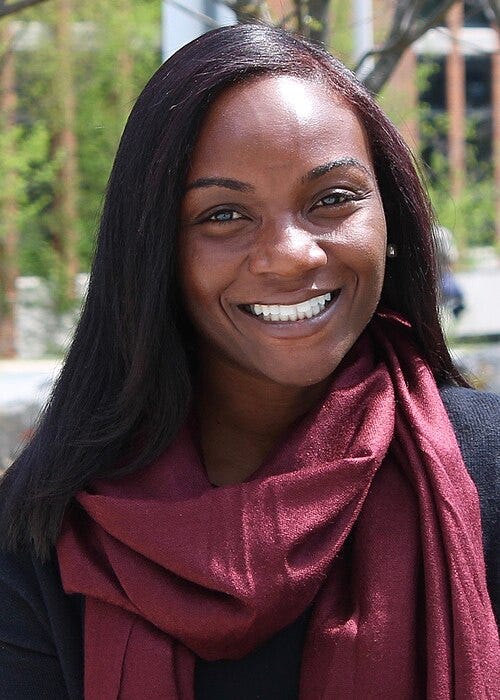
Dr. Kizzmekia Corbett, a viral immunologist, was a key Black scientist in the development of the COVID-19 Moderna vaccine. As the scientific lead for the National Institutes of Health (NIH) Vaccine Research Center's coronavirus team, her work was essential for creating one of the first highly effective mRNA vaccines.
The swift development, testing, and distribution of the COVID-19 vaccines, based on the research and distribution of previous vaccines, saved countless lives worldwide, underscoring the critical role vaccines play in safeguarding public health.
Unfortunately, in 2025, under the present administration, vaccines and vaccinations are being questioned and repudiated, leading to a resurgence of diseases such as measles, which can be deadly, that were all but eradicated.
Today In Black History
In 1950, Dr. Ralph Bunche became the first Black person to be awarded the Nobel Peace Prize.
In 1862, President Abraham Lincoln issued the preliminary Emancipation Proclamation, threatening to free all enslaved people in the Confederate States unless those states rejoin the Union by December 31, 1862. The Emancipation Proclamation was officially issued on January 1, 1863.
In 1915, HBCU Xavier University, the first Black Catholic college in the United States, opened in New Orleans, Louisiana.
In 1960, the African nation of Mali gained its independence from France.
In 1961, the Interstate Commerce Commission issued a regulation prohibiting segregation on interstate buses and in terminal facilities.
Help us to reach our September, 2025 goals: +200 total new subscribers and +60 new paid subscribers:
Please share and subscribe to help us grow this publication.
If you like us, REALLY like us, please click the little heart “Like” button at the top of this post!

Buttons:
We Are Speaking is a reader-supported publication. To receive new posts and support our work, consider becoming a free or paid subscriber.

