Issue #1,091 Today In Black History, Monday, October 26, 2026
Please enter your email below to support us by subscribing at the free or paid level for less than $10/month.
We Are Speaking is a small reader-supported publication. To receive new posts and support our work, consider subscribing at the free or paid level.
Independent authors and creative professionals! Please scroll to the “Shameless Plug” at the end to find out about the Pam Speaks 2 You Creative Business Community app for creative branding and marketing.
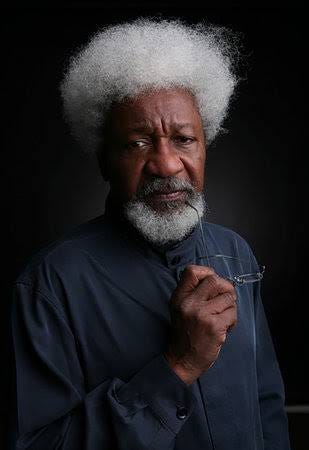
In October 1986, the Swedish Academy announced that Wole Soyinka, a Nigerian playwright, poet, and novelist, would receive the Nobel Prize in Literature. It was the first time the prize went to an African writer, and the first time it went to a Black writer anywhere in the world. Forty years later, he is still refusing to make peace with power.
A Childhood in Abeokuta
Akinwande Oluwole Babatunde Soyinka was born July 13, 1934, in Abeokuta, in southwestern Nigeria, then a British colony. His father was an Anglican minister and school headmaster; his mother ran a shop. Soyinka grew up between two worlds: the Christian mission compound and the Yoruba traditions, gods, and festivals that surrounded it. He would later capture that childhood in his celebrated memoir Aké: The Years of Childhood (1981), and the tension between those worlds became a lifelong source of his art.
He studied at Government College and University College in Ibadan before earning his English degree at the University of Leeds in England in 1958. In London, he learned the stage from the inside as a play reader at the Royal Court Theatre.
A Theater for a New Nation
Soyinka returned home in 1960, the year Nigeria won its independence, and he arrived with a play to mark the occasion. A Dance of the Forests was no flag-waving celebration. It warned the new nation not to romanticize its past or ignore its own capacity for corruption. That clear-eyed honesty became his signature.
Over the next decades, he produced a remarkable body of work: comedies such as The Lion and the Jewel and The Trials of Brother Jero, darker dramas such as The Road and Kongi’s Harvest, the novels The Interpreters and Season of Anomy, and his masterpiece, Death and the King’s Horseman (1975), a tragedy rooted in Yoruba ritual and colonial arrogance.
Prison and Exile
Soyinka’s courage has never stayed on the page. During the Nigerian Civil War, he traveled to meet the Biafran leadership to try to stop the bloodshed. The federal government arrested him in 1967 and held him for about 22 months, most of it in solitary confinement, without trial. Denied paper, he wrote on toilet paper and between the lines of books. Those notes became The Man Died: Prison Notes (1972), titled after his conviction that “the man dies in all who keep silent in the face of tyranny.”
In 1994, under the dictatorship of General Sani Abacha, Soyinka escaped Nigeria on the back of a motorcycle across the border. The regime later charged him with treason in absentia. He taught in exile, at Harvard and Emory among others, until Abacha’s death in 1998.
The Nobel and Beyond
The Swedish Academy honored Soyinka as a writer “who in a wide cultural perspective and with poetic overtones fashions the drama of existence.” He dedicated his Nobel lecture to the still-imprisoned Nelson Mandela and used it to indict apartheid.
He has never stopped testing the powerful. In 2016, he destroyed his U.S. green card in protest, and in October 2025 he announced that the United States had revoked his visa. In 2021, at age 87, he published Chronicles from the Land of the Happiest People on Earth, his first novel in nearly 50 years.
His Influence
Soyinka proved that African literature could stand at the very center of world literature. Generations of writers, from Chimamanda Ngozi Adichie to playwrights across the diaspora, have walked through the door he opened. Now 92, he remains living proof of his creed: a writer’s first duty is to tell the truth, especially when it is dangerous.
In 1921, Solomon Porter Hood was named minister to Liberia.
In 1934, Charles Hamilton Houston, Vice Dean of the Howard University Law School, became head of the NAACP legal campaign against segregation and discrimination.
In 1977, Dr. Clifton Reginald Wharton, Jr. became chancellor of the State University of New York.
Paid subscribers can always leave questions in the comments or email us.
Please consider becoming a paid subscriber for $10/month or less to access all of the articles and other benefits.
If you are an independent author or creative professional, this is your chance to join the Pam Speaks 2 You Creative Business Community, and there’s an app for that! We have 5 eBooks and 5 courses, plus networking communities designed specifically for you in the Branding and Marketing Academy!